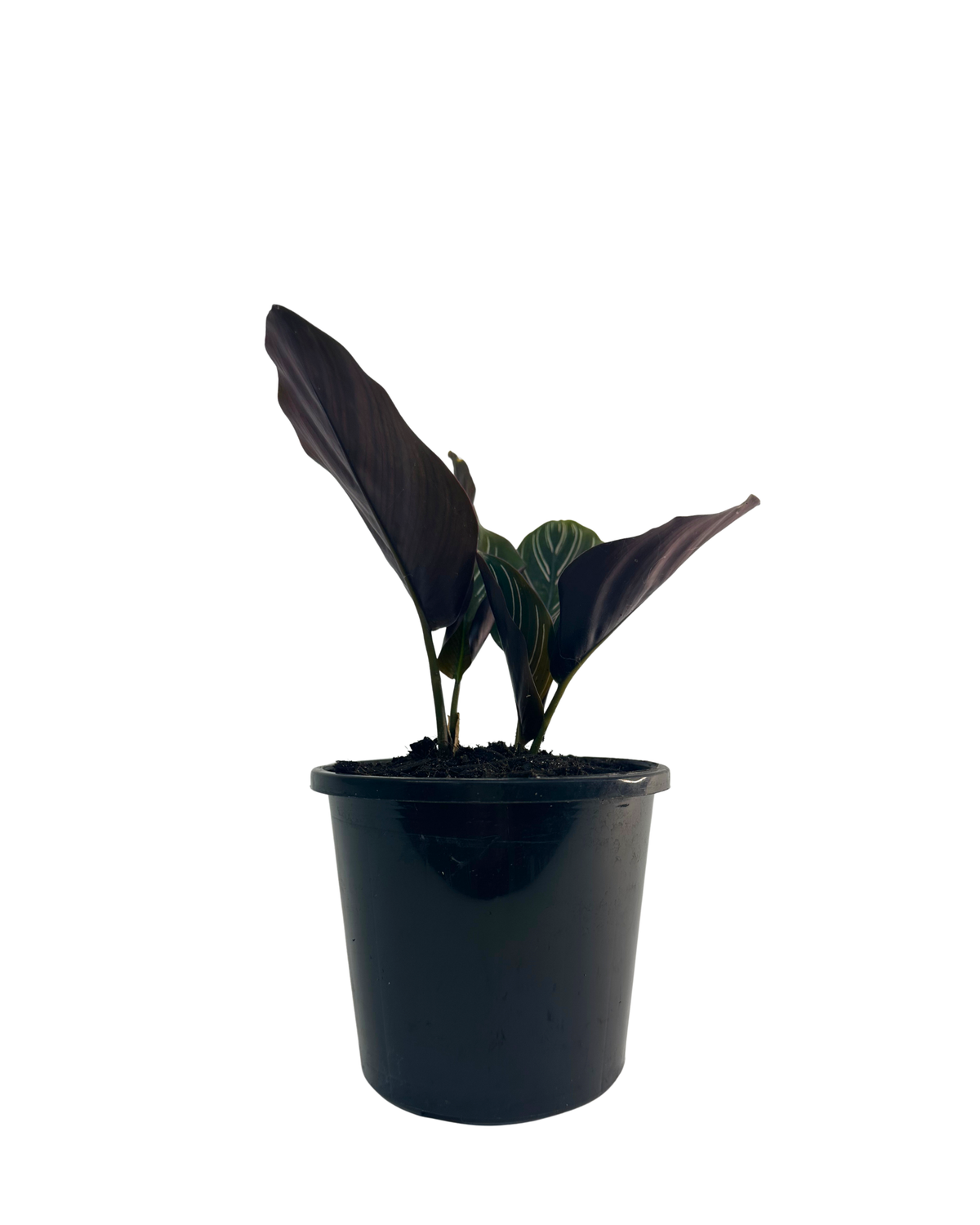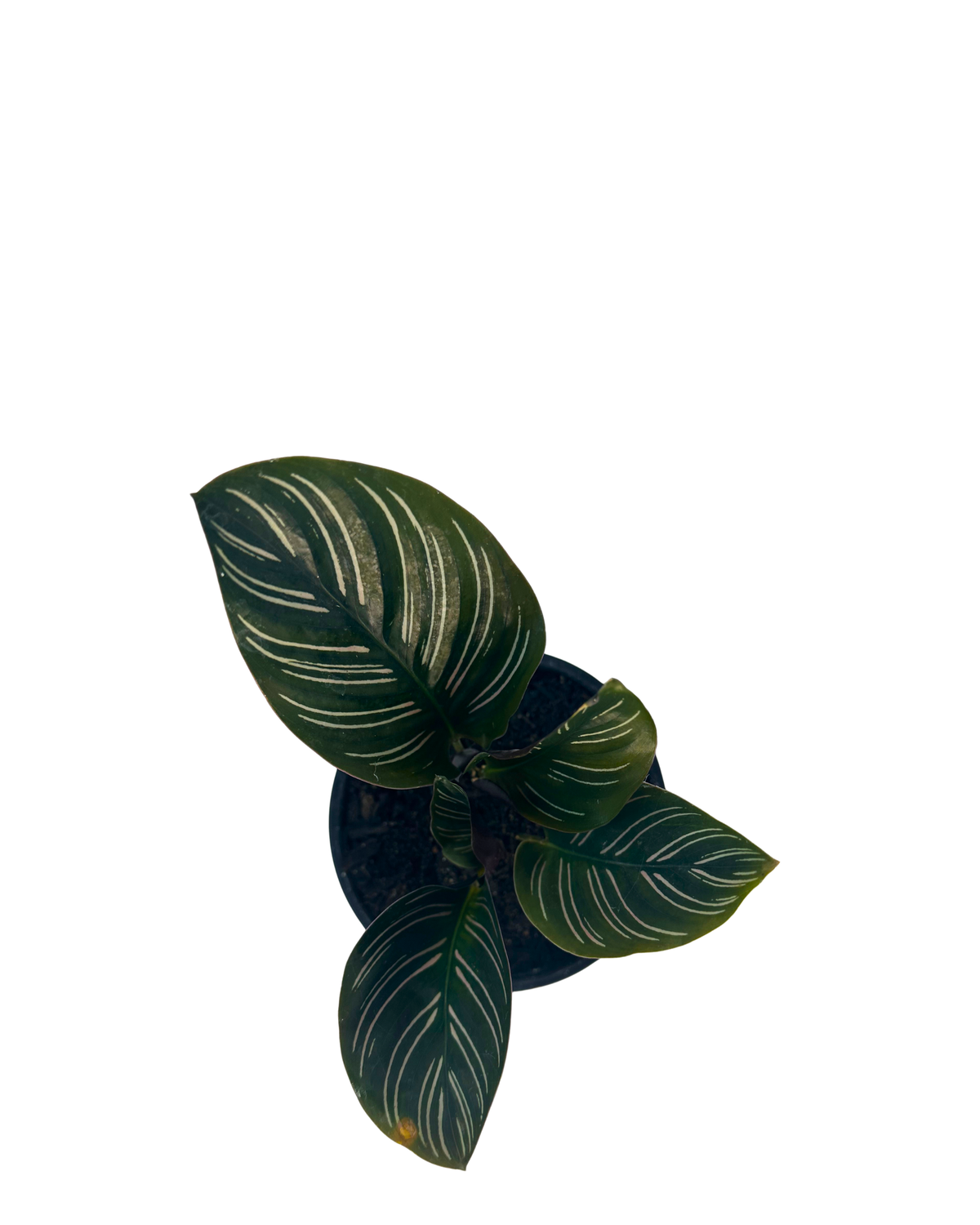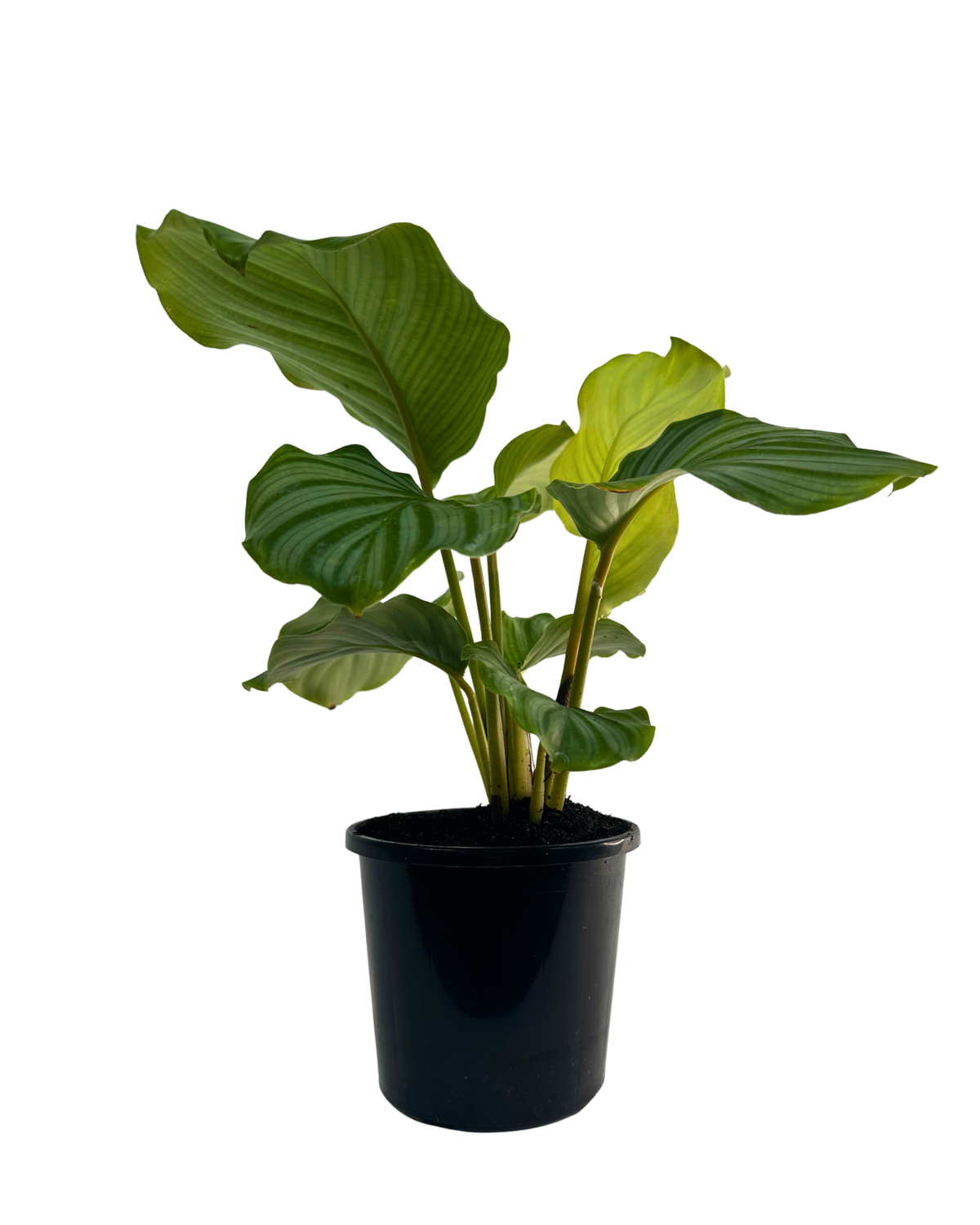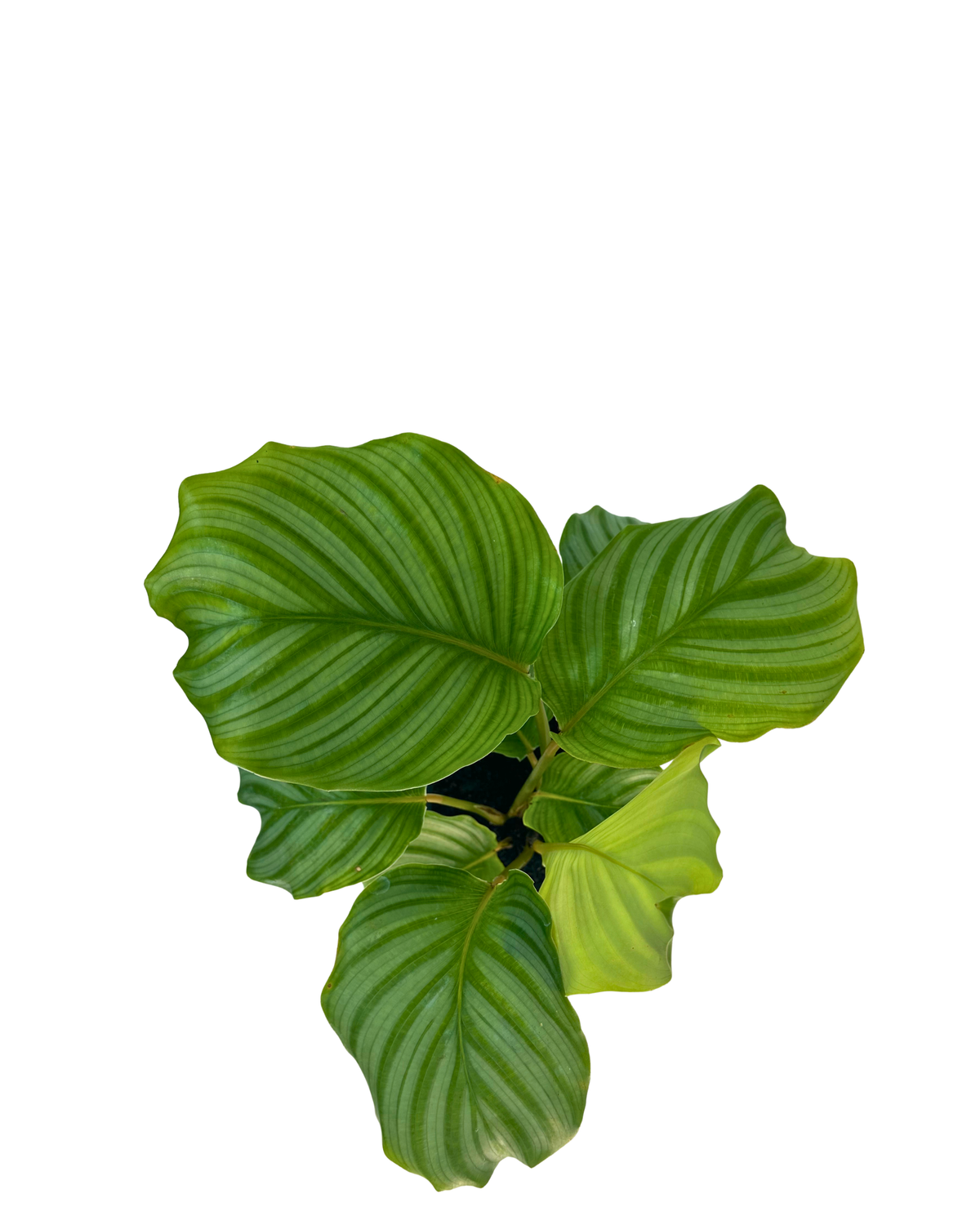
Calathea + Prayer Plant Care
Calatheas and prayer plants do best in bright indirect light, with potting mix kept evenly moist and plenty of humidity. They are fussier than most indoor plants: brown leaf tips are almost always a sign of dry air or the wrong water, and dry air also brings spider mite. Calatheas and prayer plants are safe around pets.
Calatheas, marantas and ctenanthes
All three are prayer plants, grown for patterned leaves that fold upward at night and open again in the morning. They share the same care.
Calatheas carry the boldest patterns, in deep green, silver, cream, pink and purple.
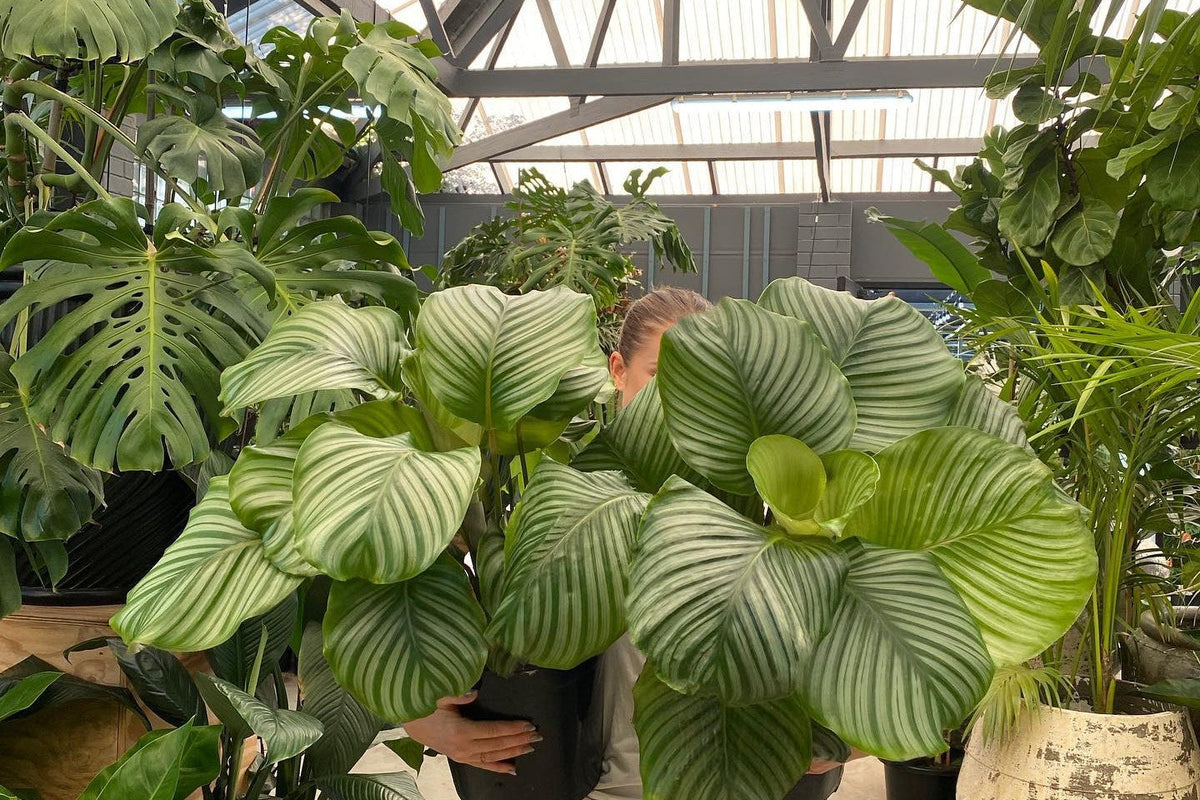
- Calathea Orbifolia has large, round leaves with broad silver stripes.
- Calathea Rufibarba has narrow, wavy leaves with a soft, furry underside.
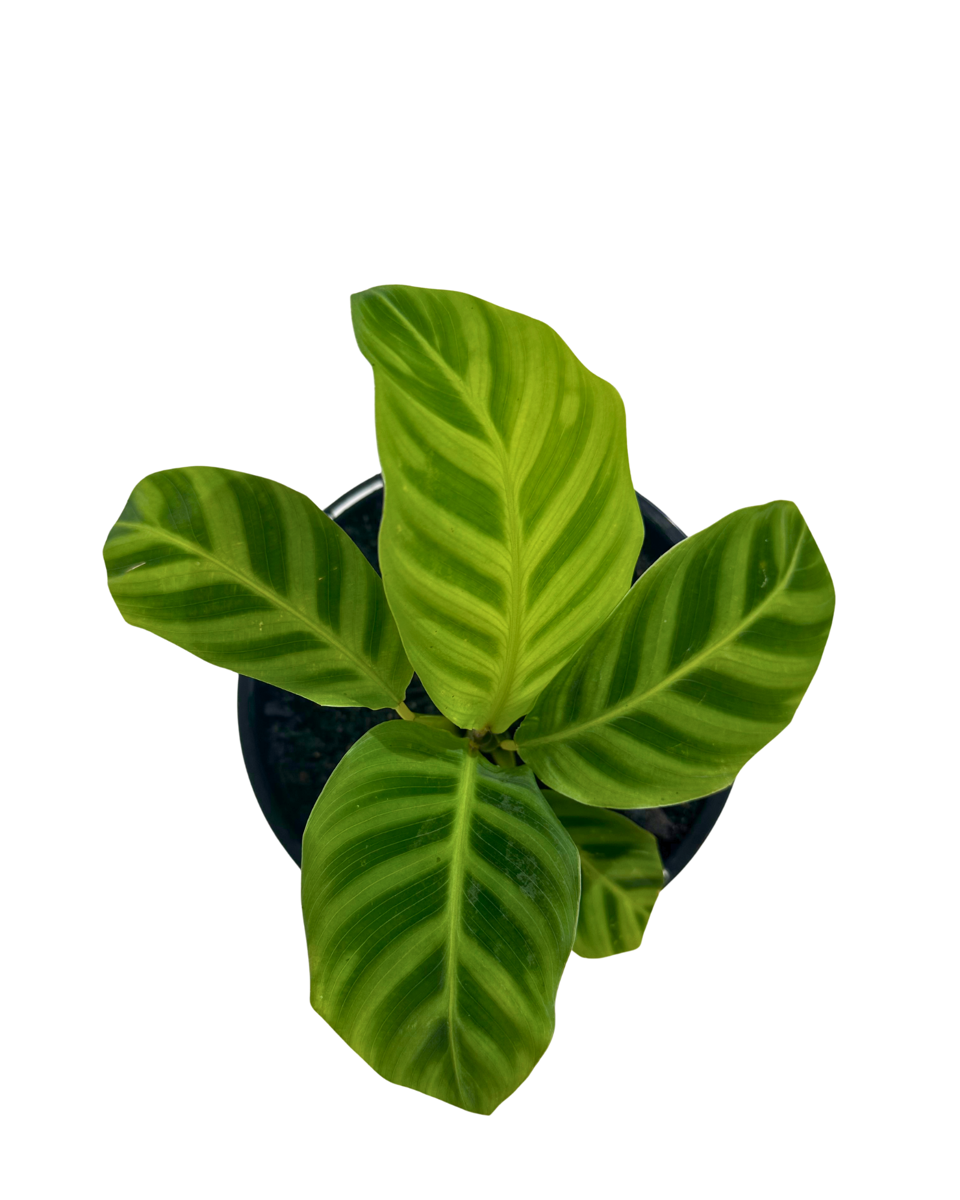
- Calathea Zebrina, the zebra plant, has large, velvety bright green leaves striped in deep green, with purple undersides.
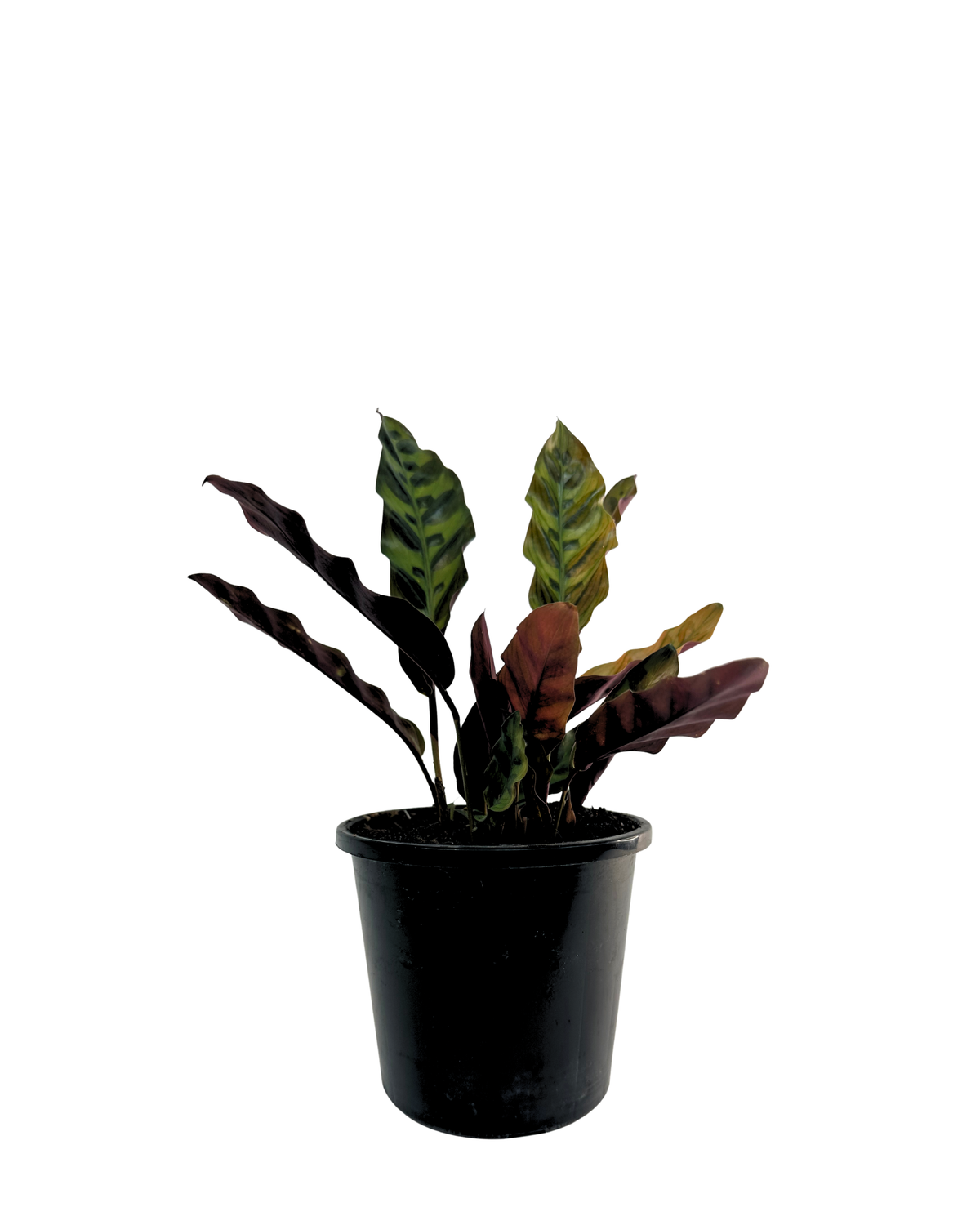
- Calathea Insignis, the rattlesnake plant, has long, wavy leaves with dark green markings.
- Calathea Sanderiana has dark leaves with fine pink stripes.
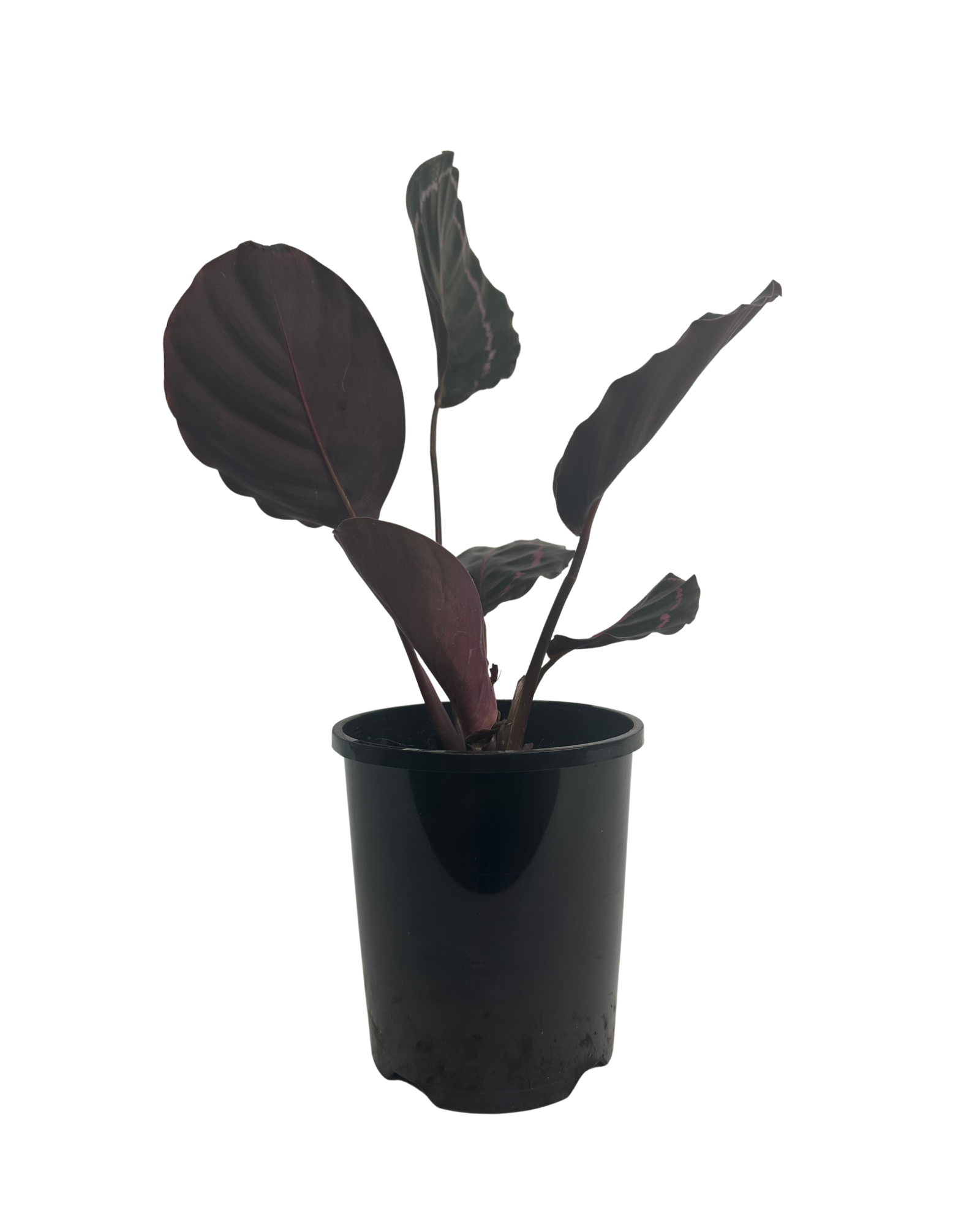
- Calathea Dottie has near-black leaves outlined in pink.
- Calathea Freddy has pale green leaves with dark green stripes.
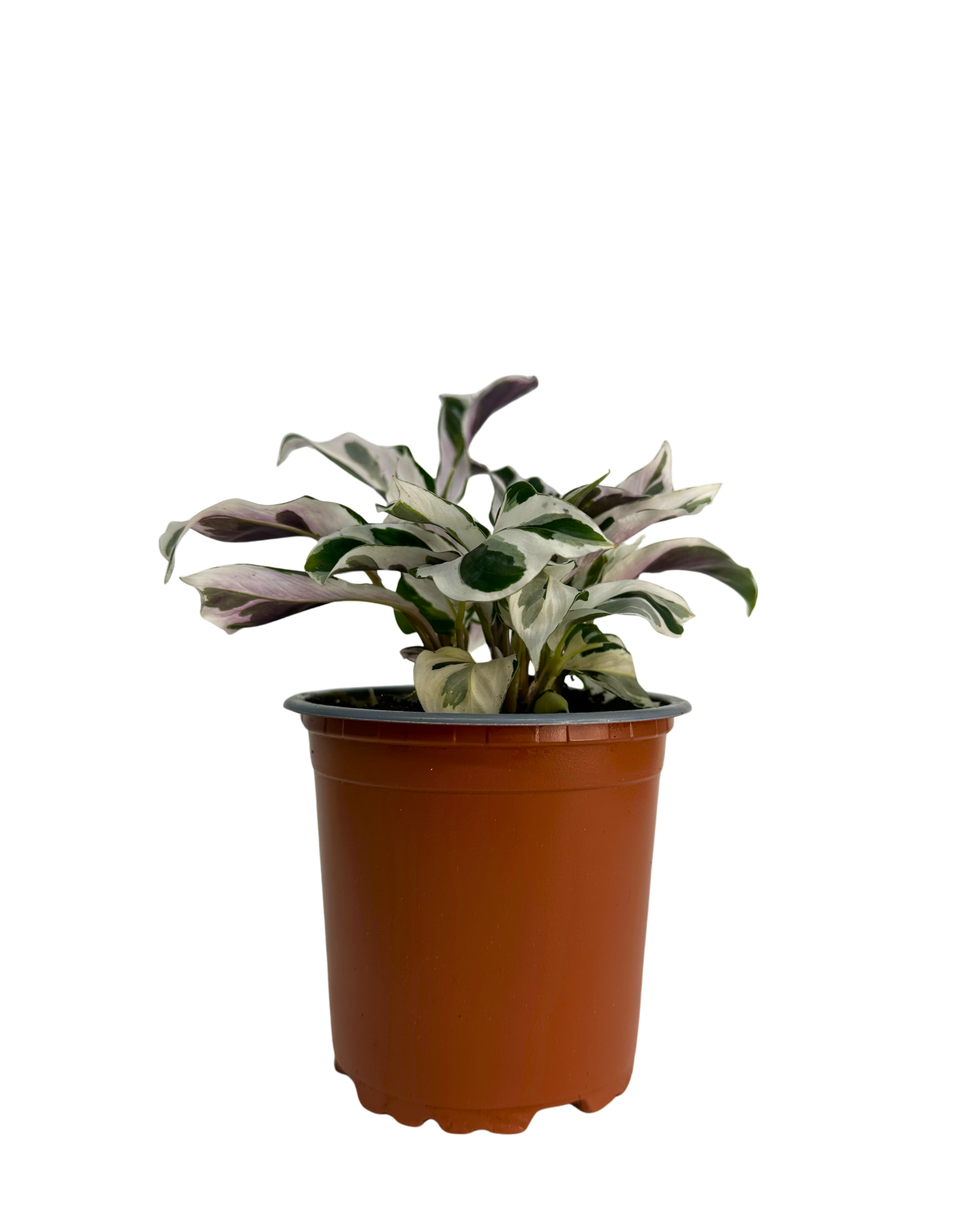
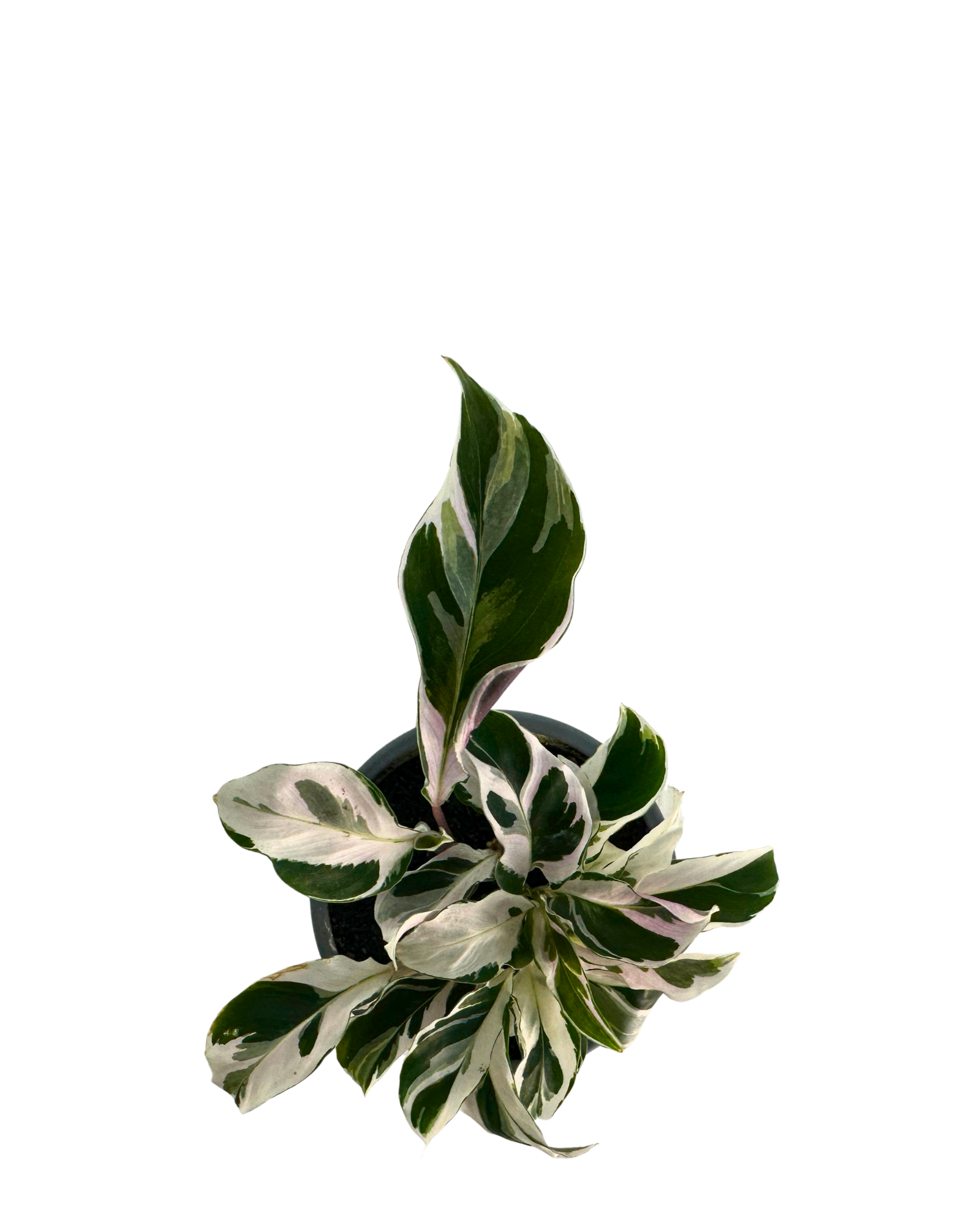
- Calathea White Fusion has green leaves streaked heavily with white, and needs the most care of the range.
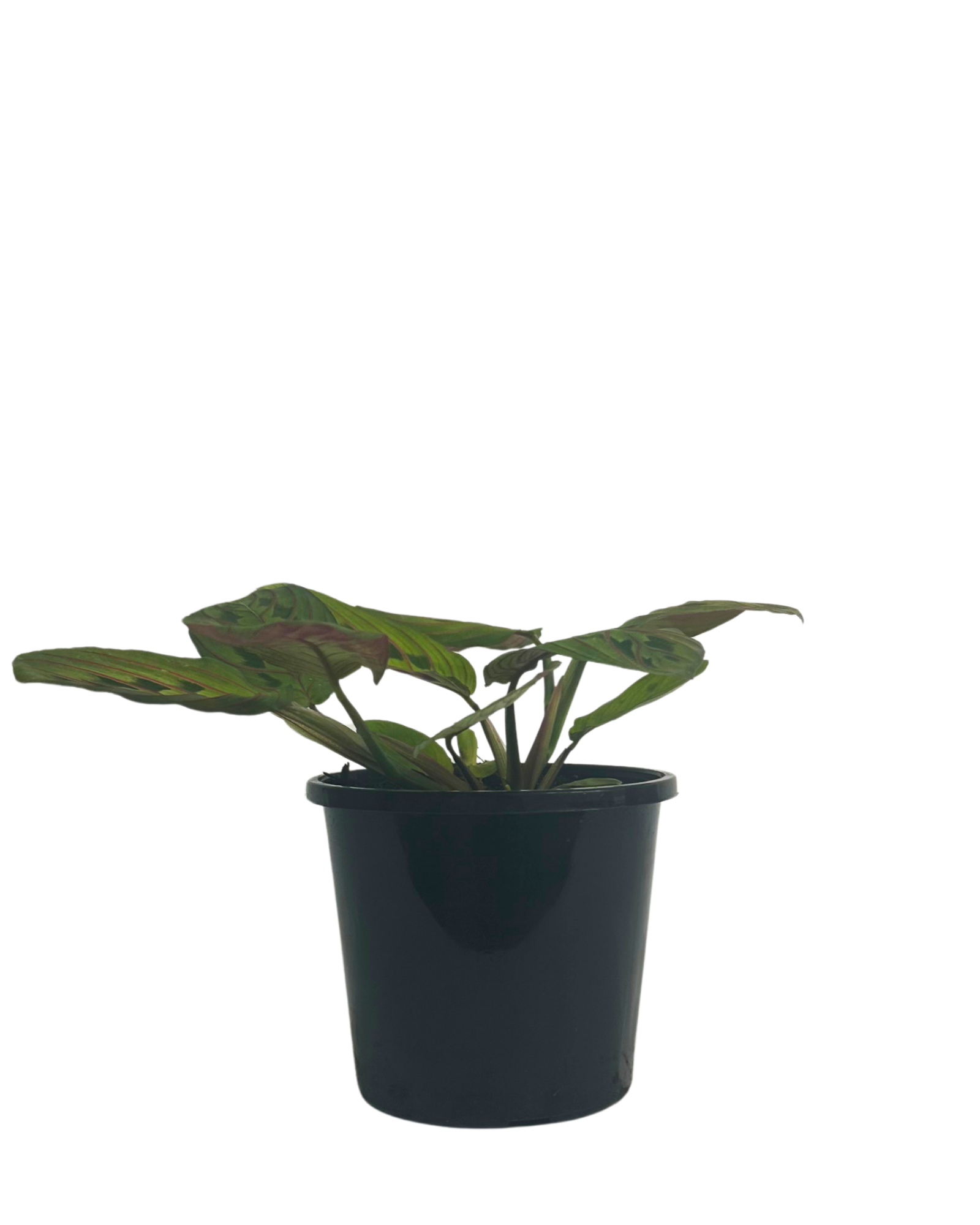
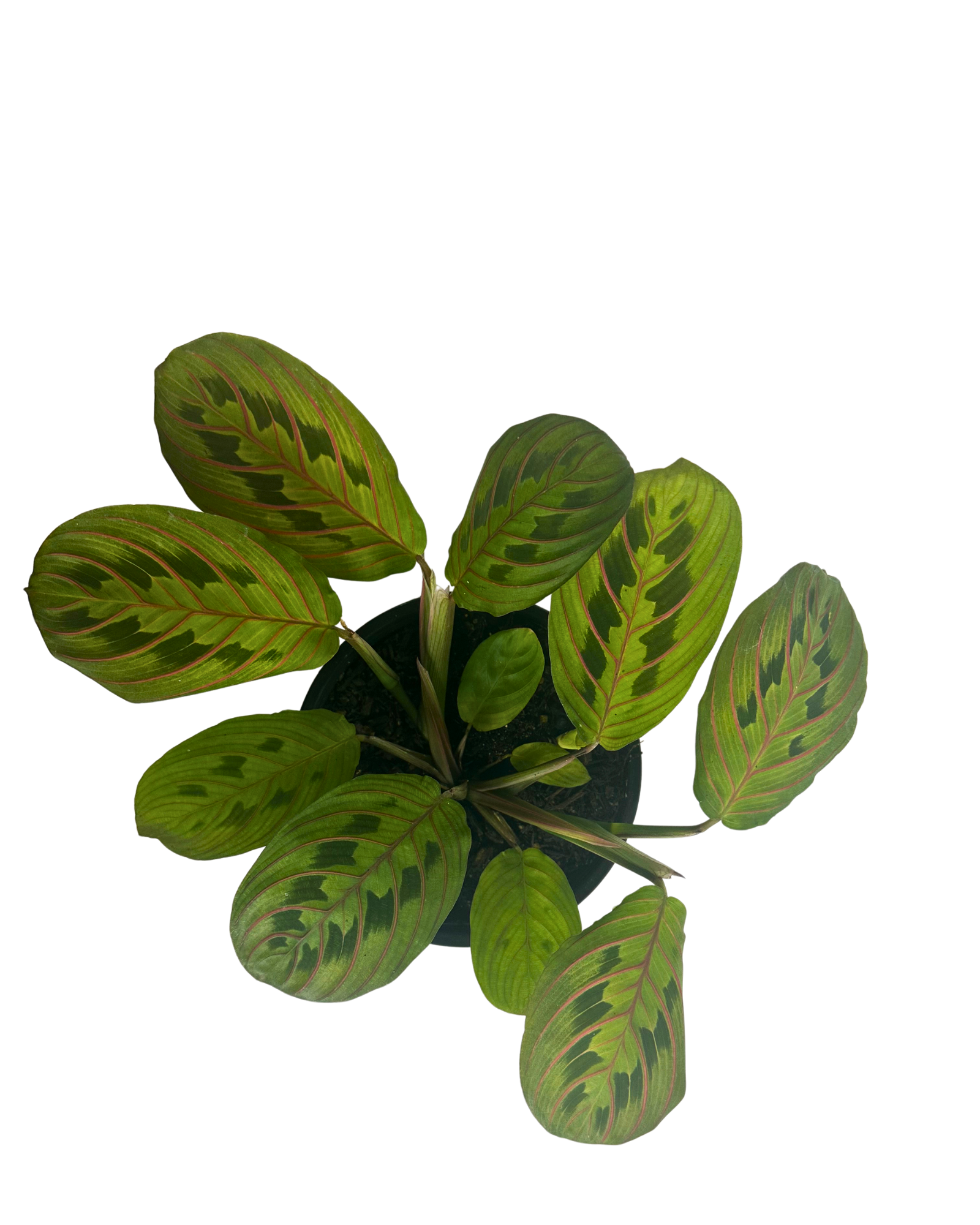
Marantas are the original prayer plants, smaller and more spreading, and the easiest of the group.
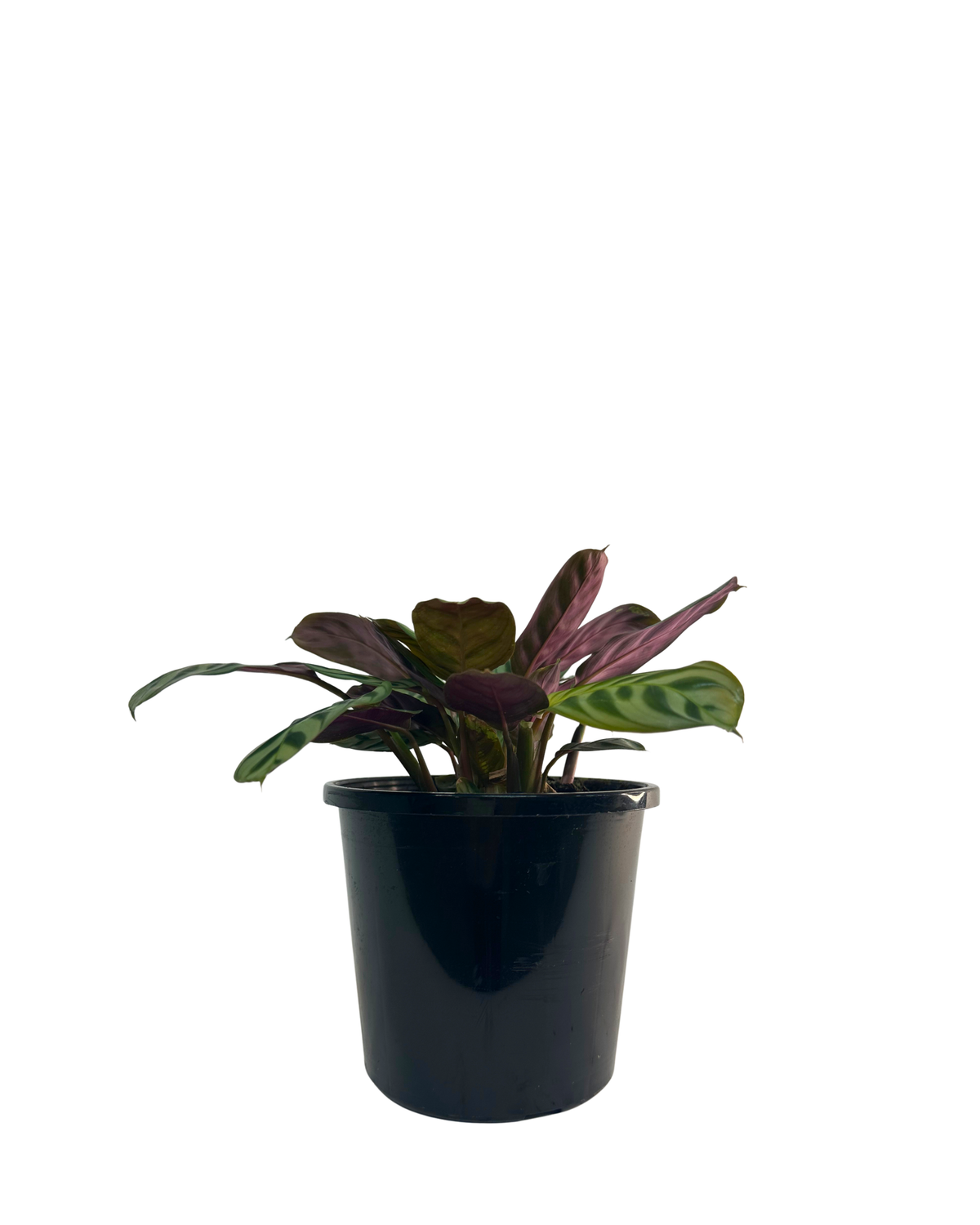
- Maranta Kerchoveana has green leaves with dark blotches, which give it the name rabbit tracks.
- Maranta Fascinator has deep green leaves with red veins and a pale centre.
Ctenanthes grow as a spreading clump and are a little tougher than calatheas.
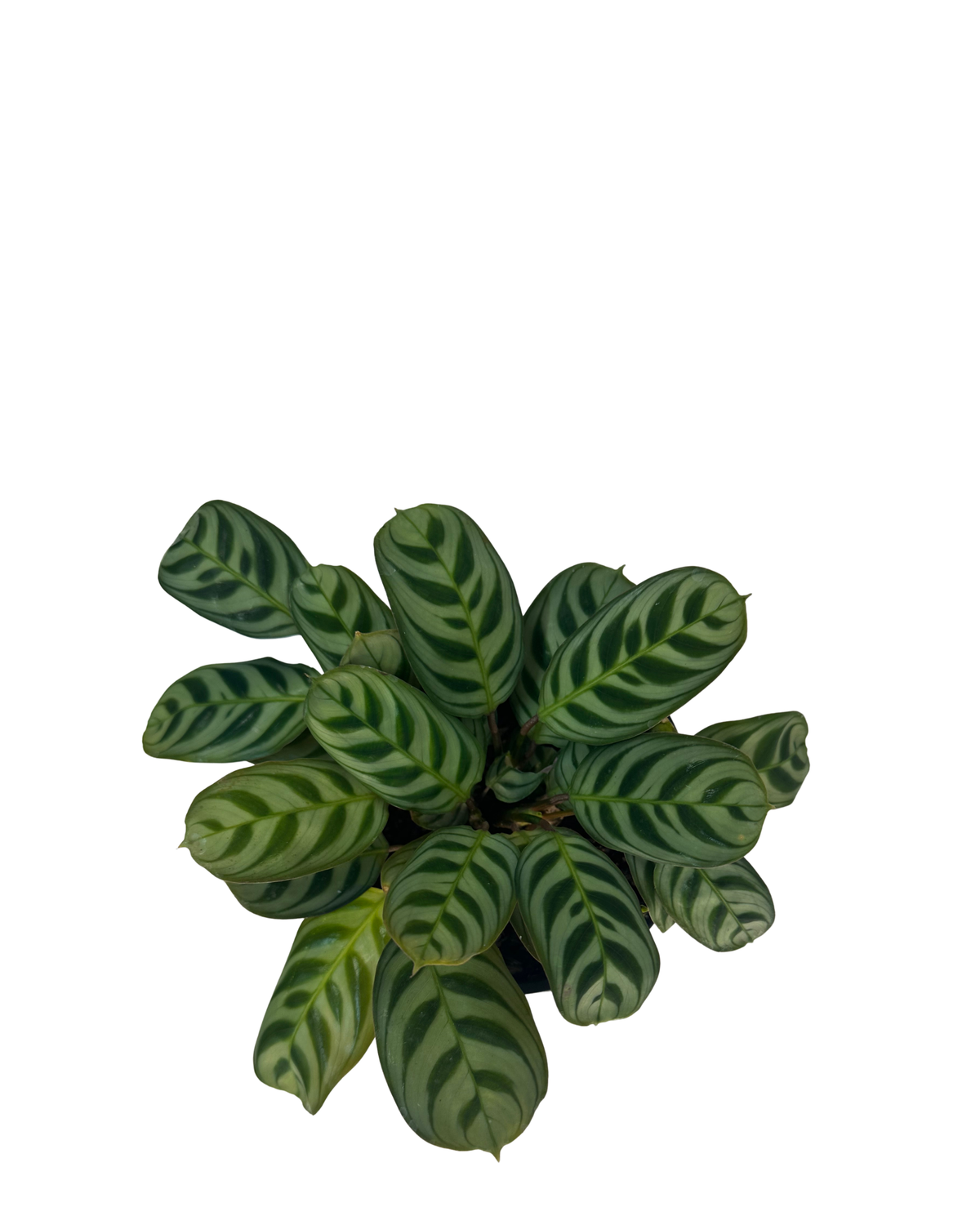
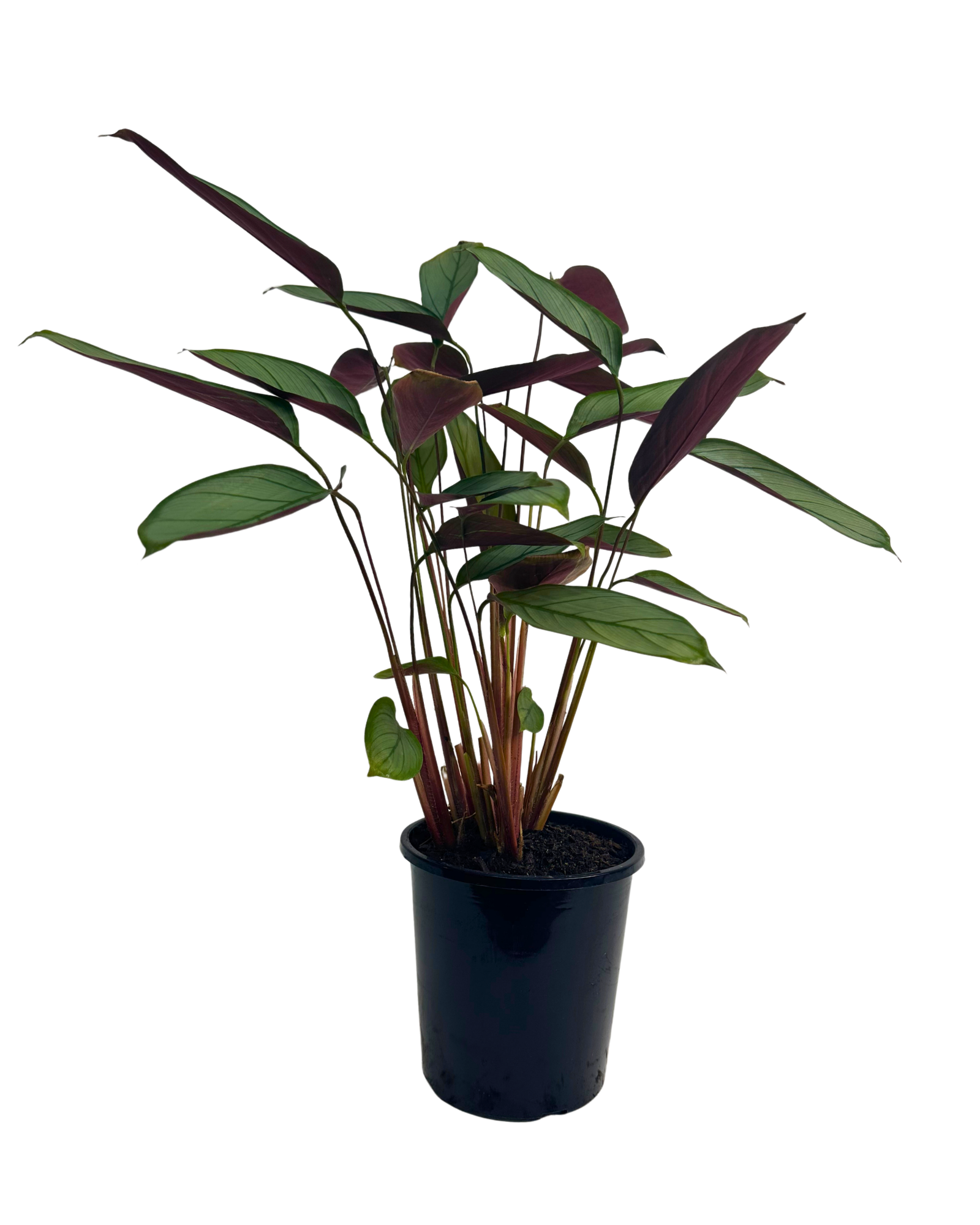
- Ctenanthe Burle Marxii, the fishbone prayer plant, has pale silvery-green leaves marked with dark herringbone bars over deep purple undersides.
- Ctenanthe Grey Star has silvery-grey leaves.
- Ctenanthe Golden Mosaic has green leaves splashed with yellow.
Browse the full range in our Calatheas + Prayer Plants collection.
Watering
Keep the potting mix evenly moist through the warmer months, but never waterlogged. In practice, check every few days in a Perth summer and water as soon as the surface feels dry. Water until it runs from the drainage holes, then let it drain, and never leave the pot standing in water.
In winter the potting mix dries more slowly, so wait longer between waterings.
Calatheas are sensitive to the salts and chemicals in tap water, which show as brown leaf tips. Use rainwater or filtered water where you can, at room temperature.
Light
Give calatheas and prayer plants bright indirect light, out of direct sun. Direct sun burns the leaves and bleaches the patterns, and in Perth afternoon sun through glass is the worst of it. They tolerate lower light than many indoor plants, though the patterns are less defined and growth slows.
Humidity
Calatheas and prayer plants come from the floor of tropical rainforests and need humidity. Mist the leaves regularly, group them with other indoor plants, or stand the pot on a tray of wet pebbles with the base of the pot clear of the water. A bathroom or kitchen with good light suits them.
Brown tips and curling leaves
Brown, crisp leaf tips usually mean dry air or minerals in the water. Mist more often, move the plant away from heaters, air conditioners and draughts, and switch to rainwater or filtered water. The brown tips will not turn green again, so trim them off with clean scissors, following the shape of the leaf.
Leaves that curl inward during the day mean the plant is short of water or the air is too dry.
Air conditioning and heaters
Keep calatheas and prayer plants well away from the airflow from air conditioners and heaters. Refrigerated air conditioning dries both the air and the potting mix, so a plant in an air-conditioned room needs misting and checking more often through summer.
Temperature
Calatheas and prayer plants dislike the cold. Keep them in a warm room through winter, away from cold windows and draughts, and they will not tolerate frost.
Feeding
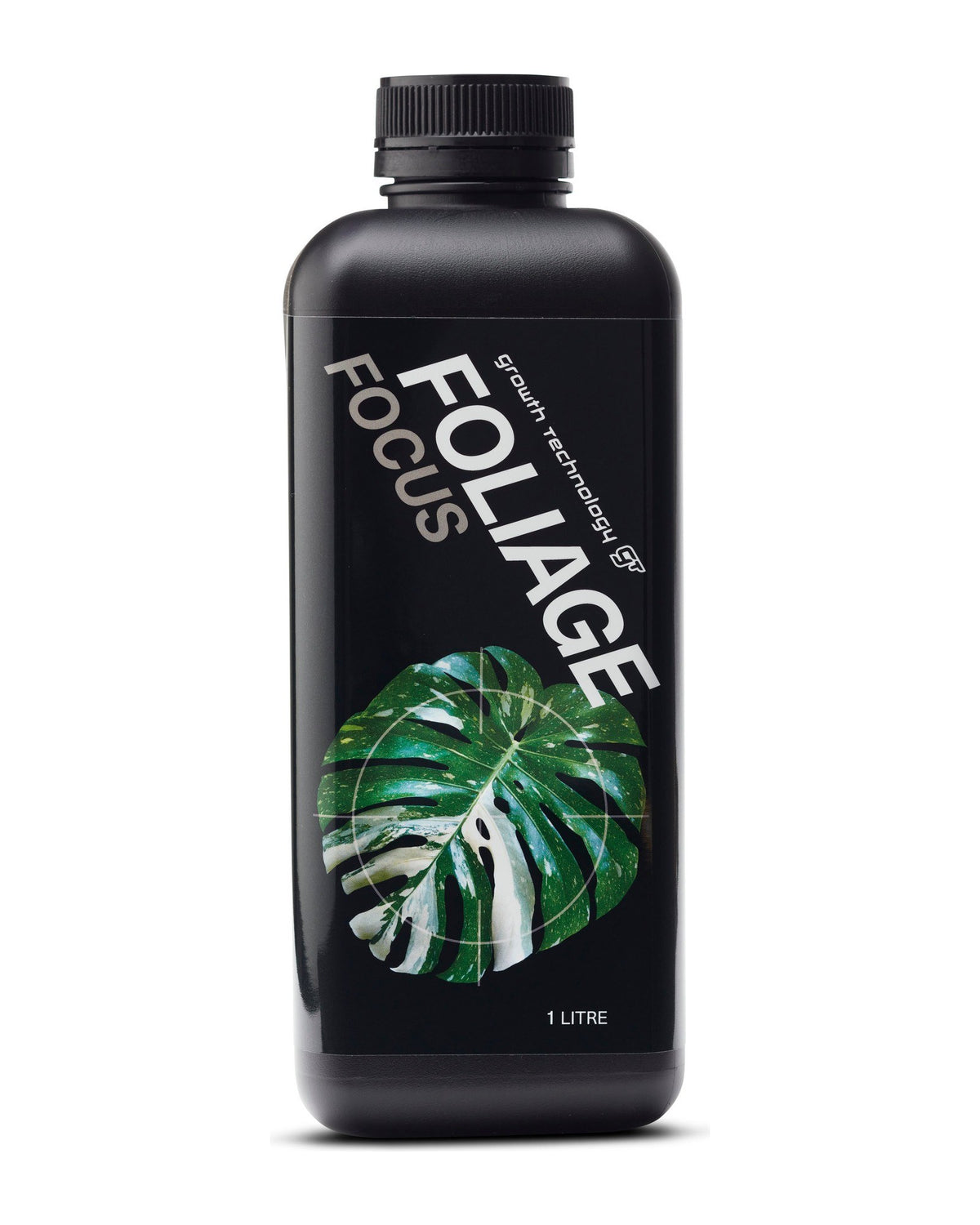
Feed through the growing season, from spring to the end of summer, and stop over winter. A liquid feed each month suits them. We recommend Growth Technology Foliage Focus or Plant Runner Indoor Plant Food.
Pots and potting mix
Calatheas and prayer plants need a light potting mix that holds moisture without staying wet. We recommend a specialised indoor potting mix, such as The Home Plant Co Indoor Potting Mix or Searles Indoor Potting Mix. For a large plant, such as a mature Orbifolia, use a well-draining premium potting mix, such as Waldecks Premium Potting Mix.
Keep the plant in its nursery pot inside a decorative pot, where water can drain away from the roots. For a calathea or prayer plant in a nursery pot of 175mm or smaller, our Trio pots are the range to look at.
Cleaning the leaves
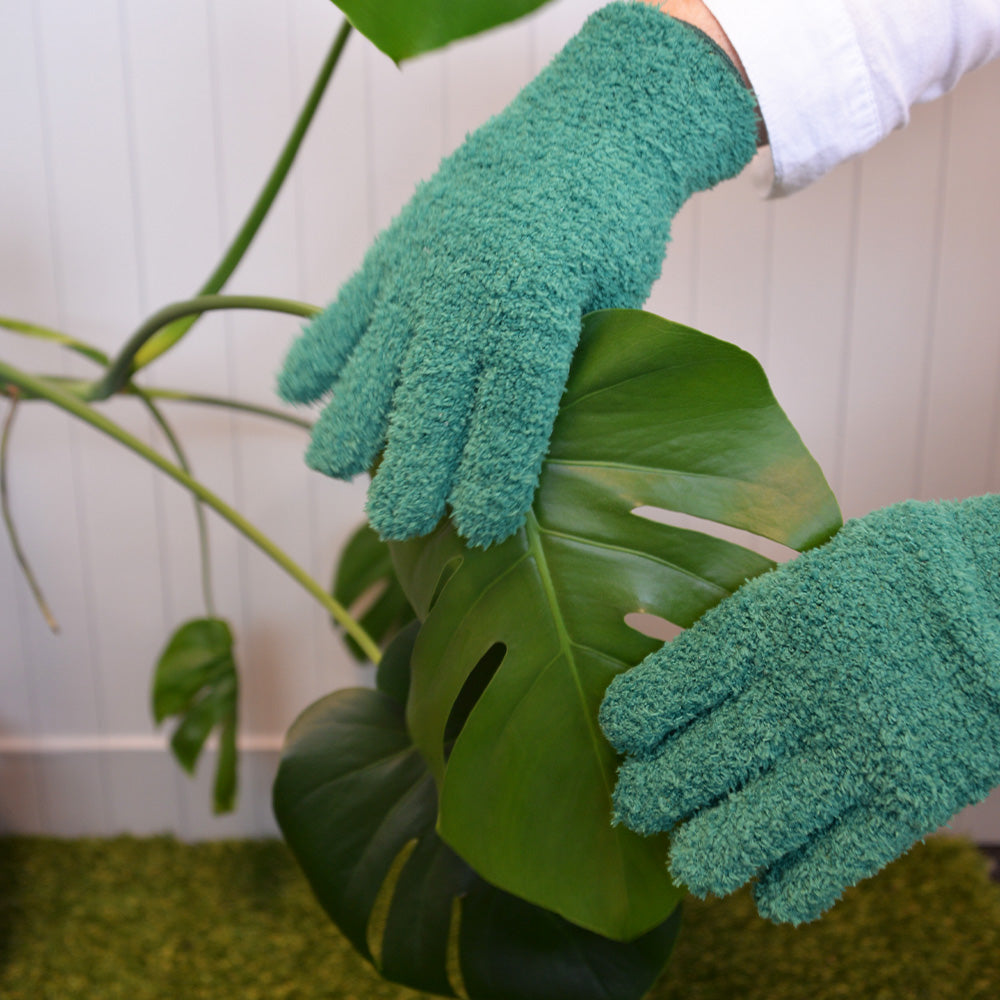
Wipe the leaves with a soft damp cloth to keep the patterns clear, supporting each leaf from below. Leaf Love Gloves and microfibre leaf cleaning gloves make it quicker. Skip leaf shine on calatheas, and wipe the velvet-leaved Zebrina and Rufibarba gently or not at all.
Pests
Spider mite is the pest to watch for on calatheas and prayer plants. It thrives in dry air, so a plant near an air conditioner or heater is the most at risk. It shows as fine pale speckling or yellow mottling on the leaves, and in a bad case as fine webbing on the undersides. Spider mite is hard to get rid of once established and can kill a healthy plant, so check the undersides of the leaves whenever you water.
Keeping the humidity up is the best way to keep spider mite away. If you find it, move the plant away from your other indoor plants and rinse the leaves, tops and undersides, under the shower.
Mealybug, which looks like small pieces of cotton wool in the leaf joints and under the leaves, can also appear, mostly on a plant kept in low light or dry potting mix.
If you find either, bring a photo into one of our garden centres, or a leaf sealed in a zip-lock bag or container, and our team will tell you what it is and what to do.
Pets
Calatheas and marantas are non-toxic, so they are a good choice for a home with cats or dogs.