Alocasia Care
Alocasias do best in bright indirect light, in a warm spot, with potting mix kept moist but never waterlogged. Most of the range are indoor plants, and two are large elephant ears for a shaded Perth garden. In winter many alocasias slow down or lose their leaves, and that is normal.
Alocasia types
Indoor alocasias are compact plants grown for the colour, pattern or texture of the leaf. They suit a well-lit spot indoors, or a sheltered outdoor entertaining area through the warmer months.
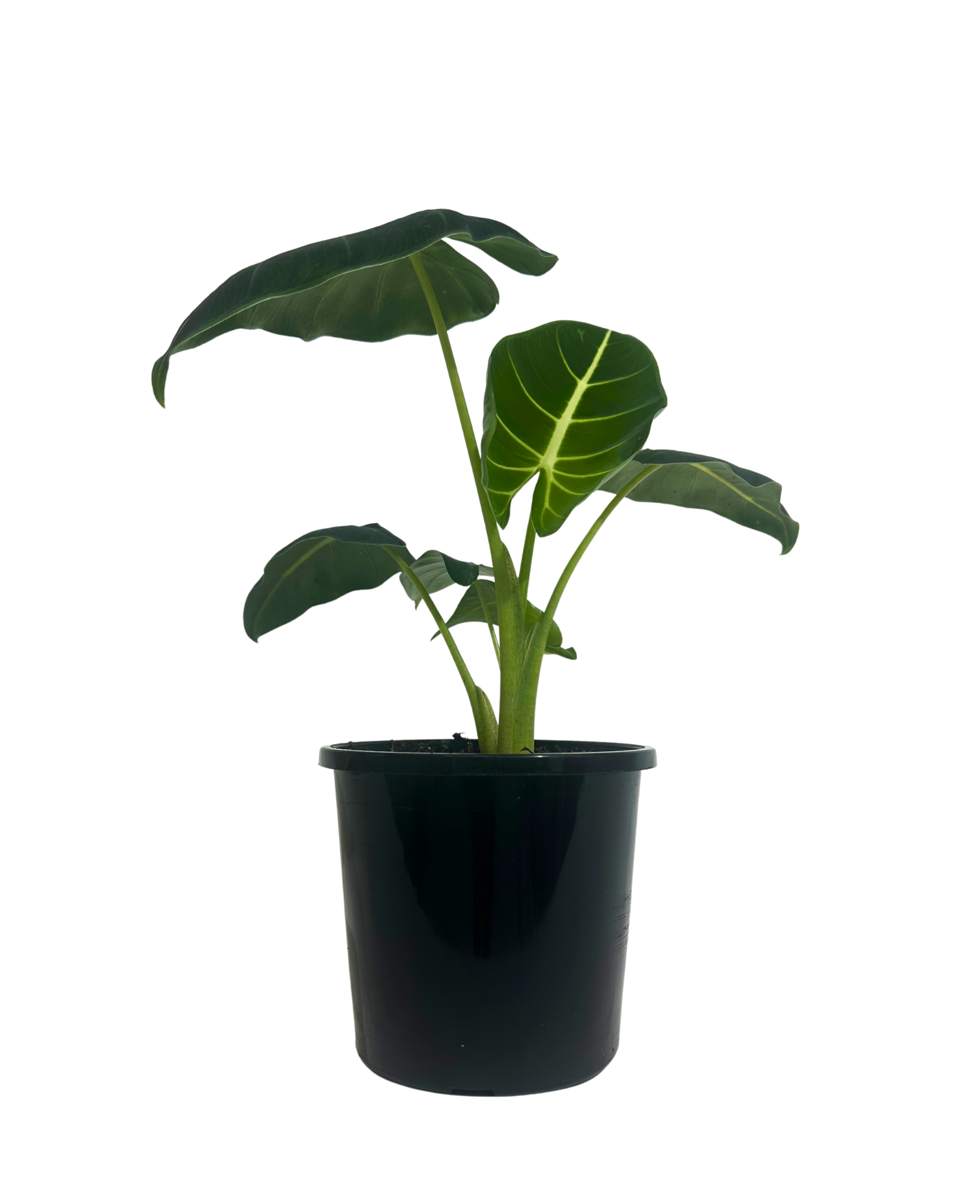
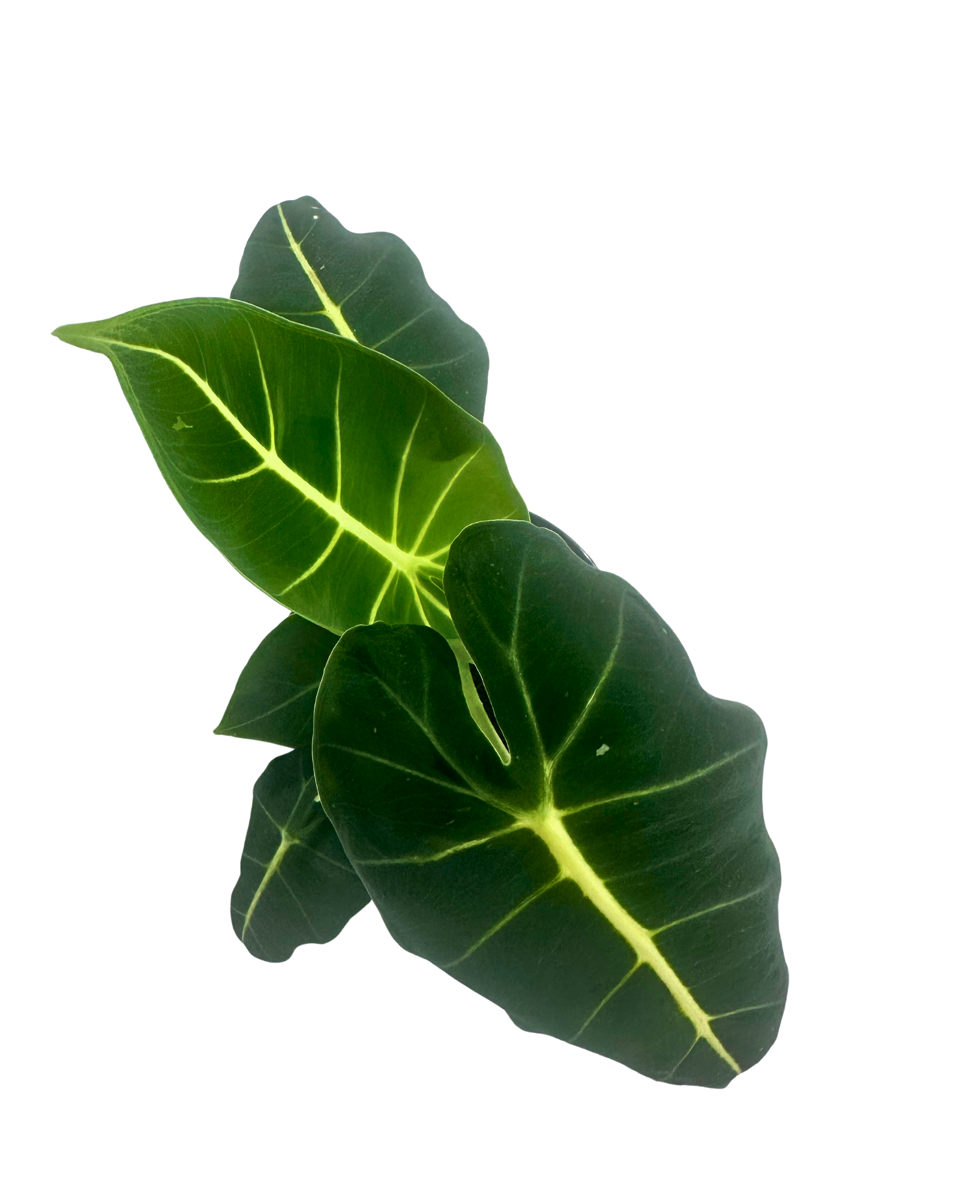
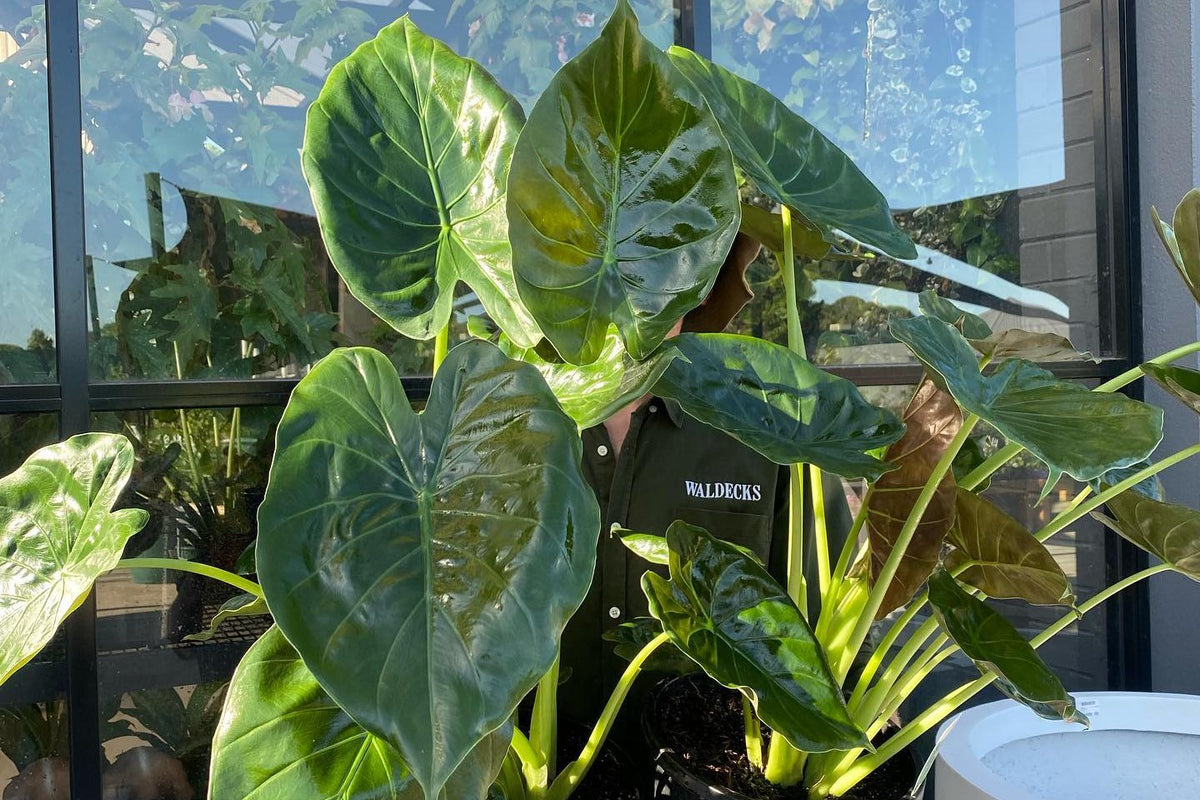
- Alocasia Amazonica has arrow-shaped leaves in deep, near-black green with vivid white veins.
- Alocasia Frydek Green has velvety, deep green arrow-shaped leaves with bold white veins.
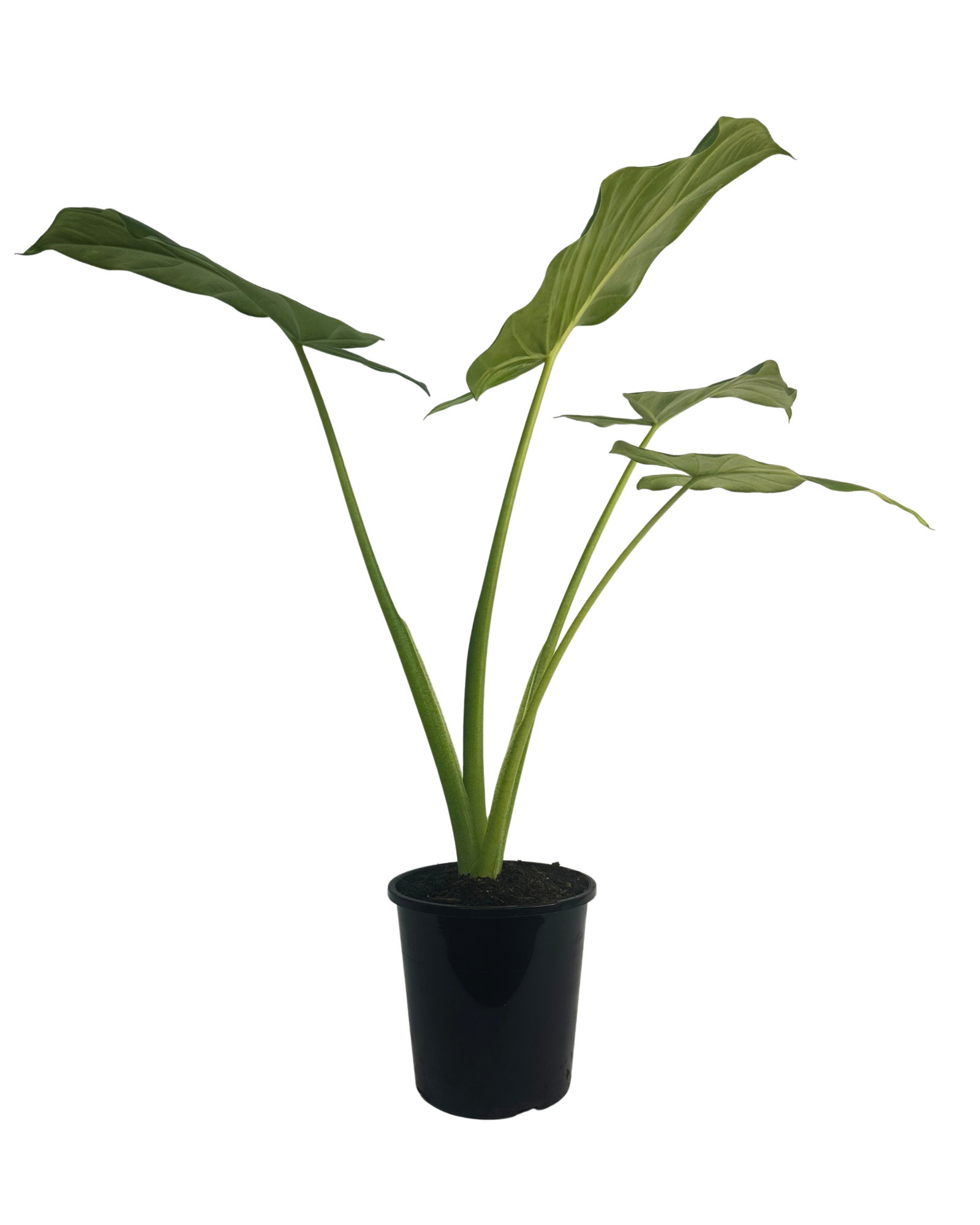
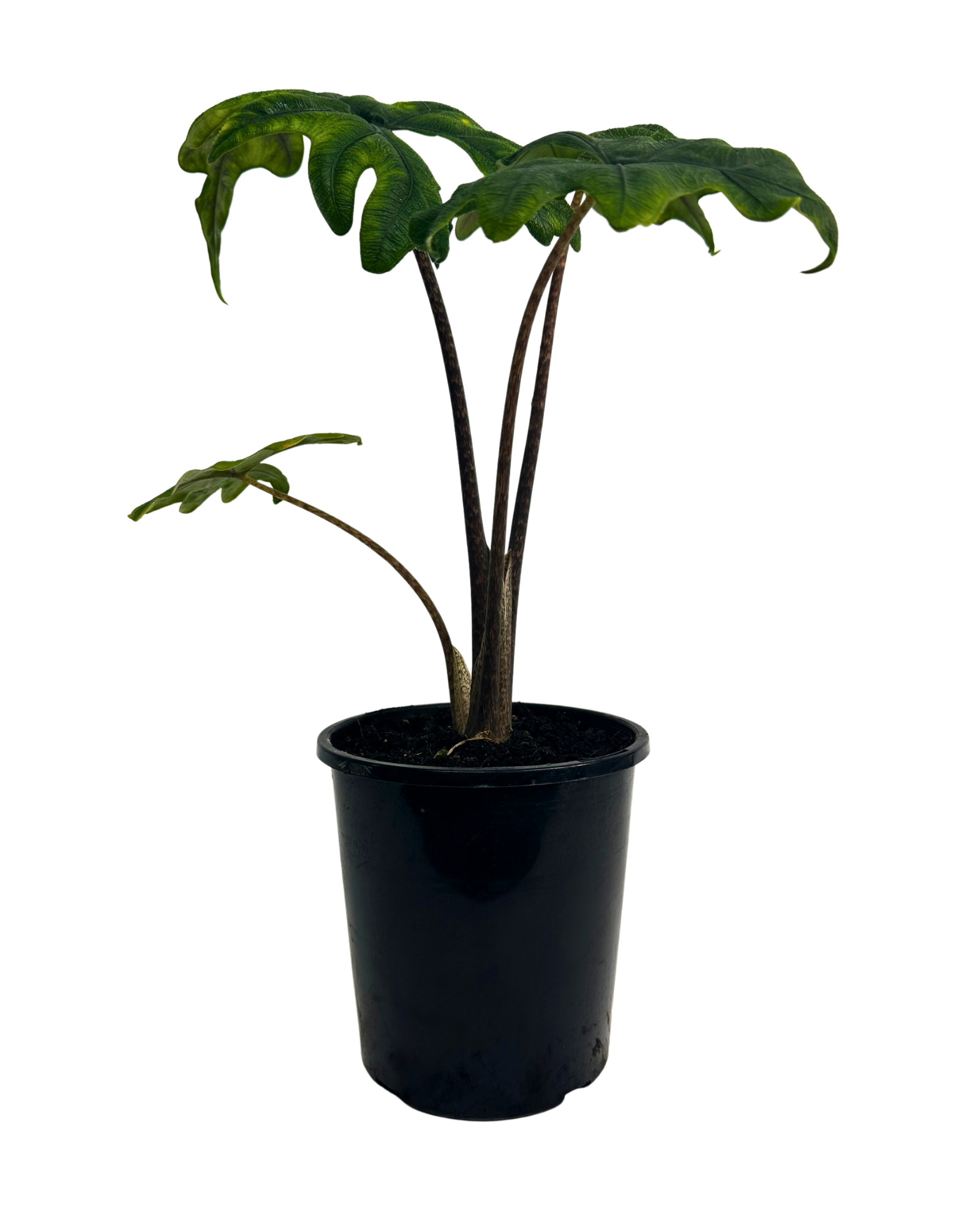
- Alocasia Jacklyn is grown for its shape, with deeply cut leaves in pale green and dark veins.
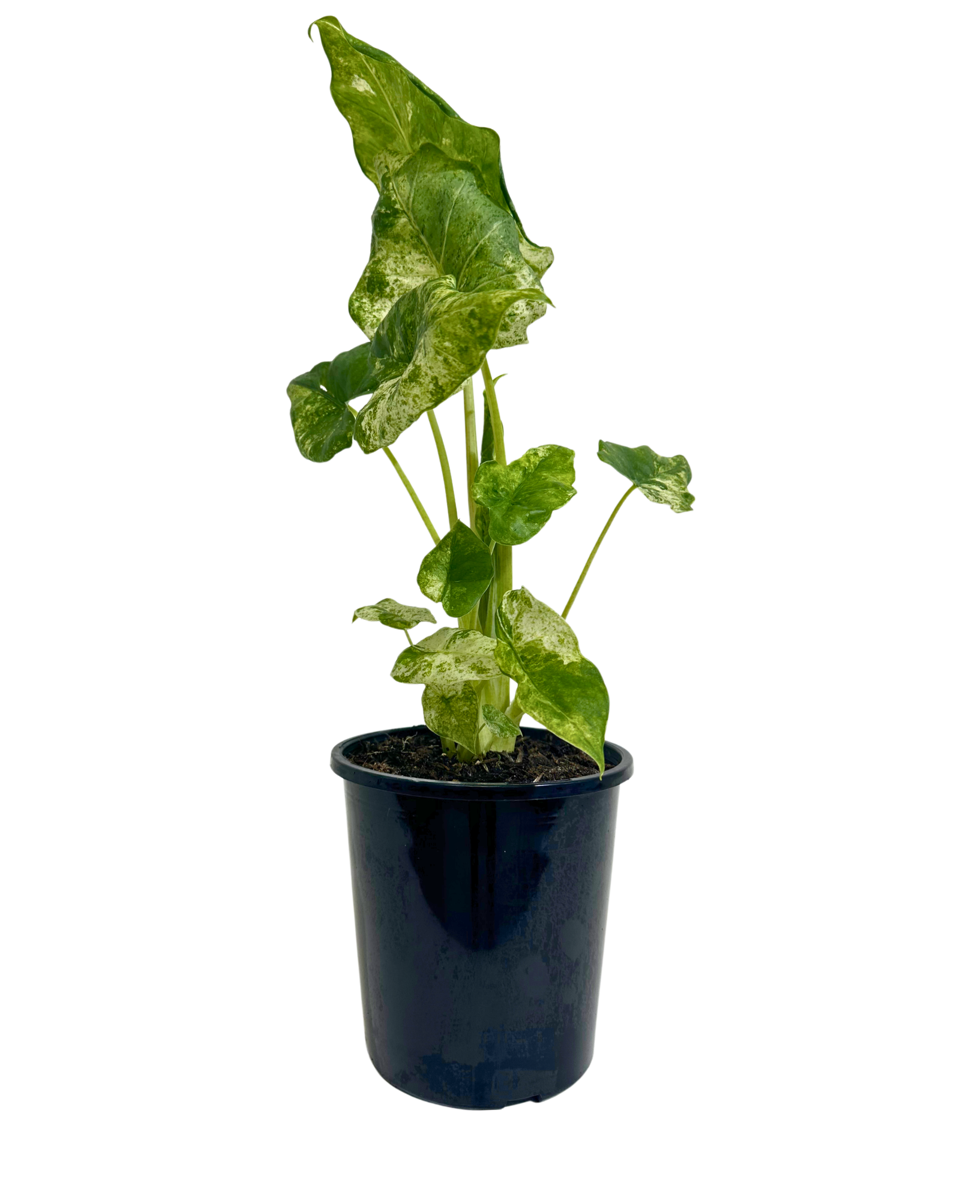
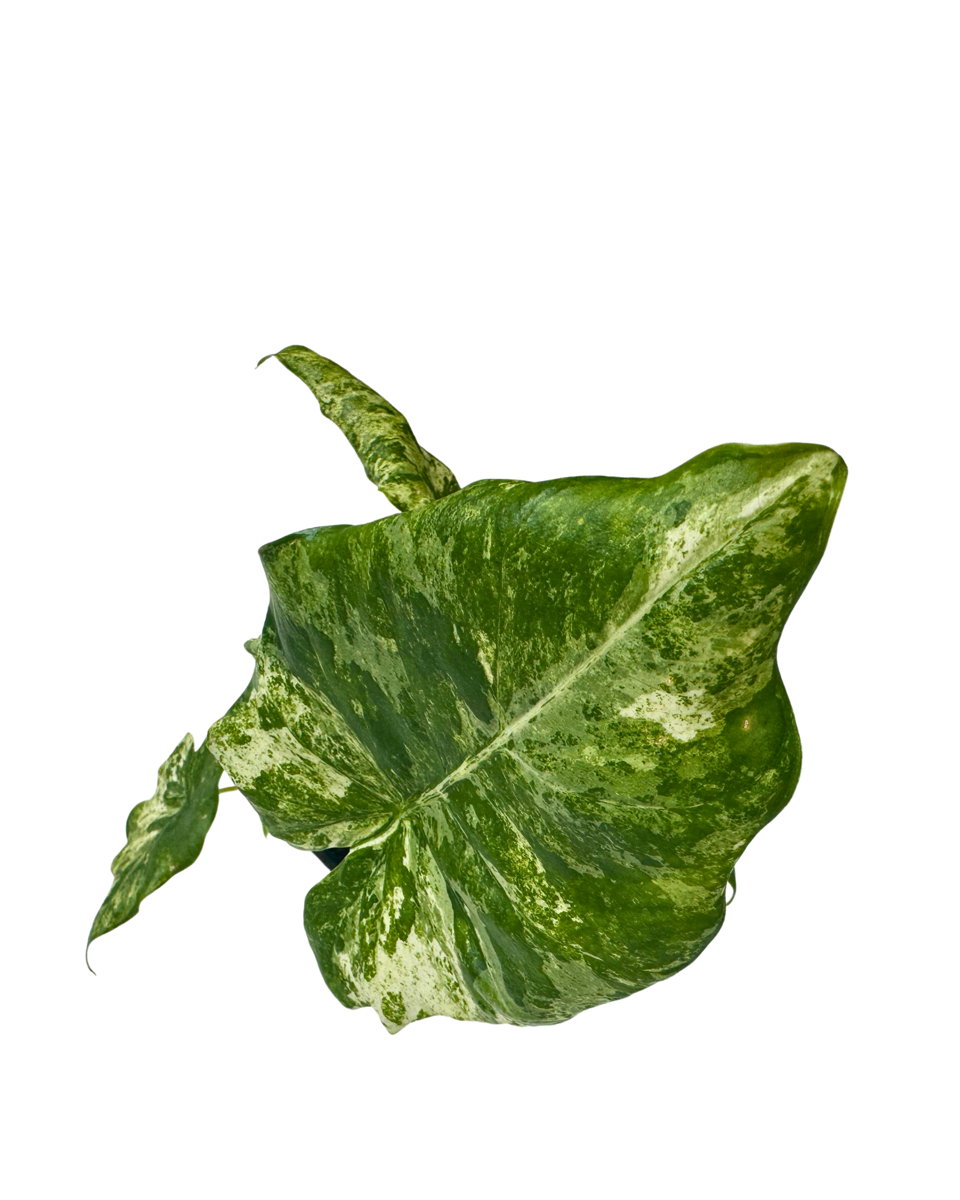
- Alocasia Camouflage has mottled grey-green leaves and stays more compact than most.
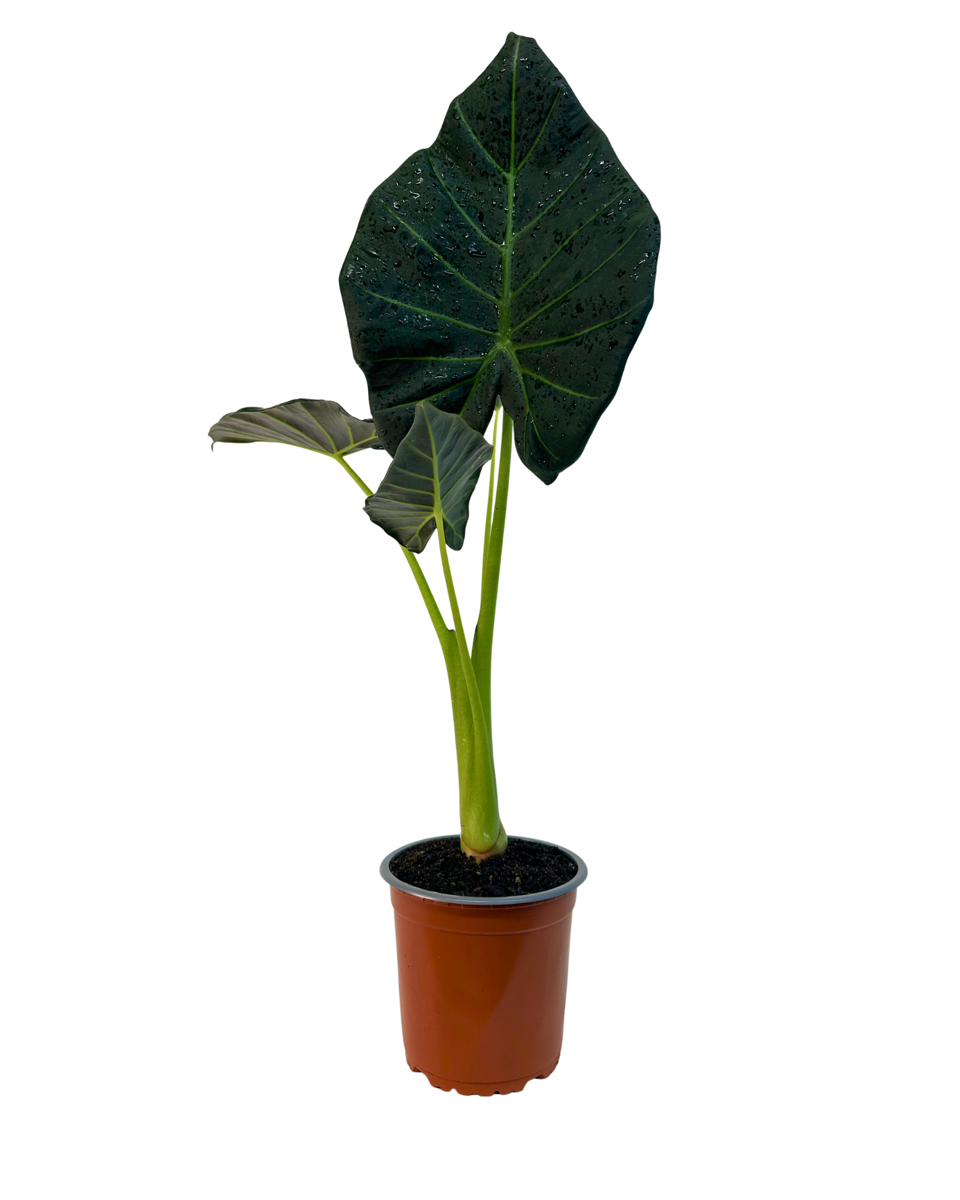
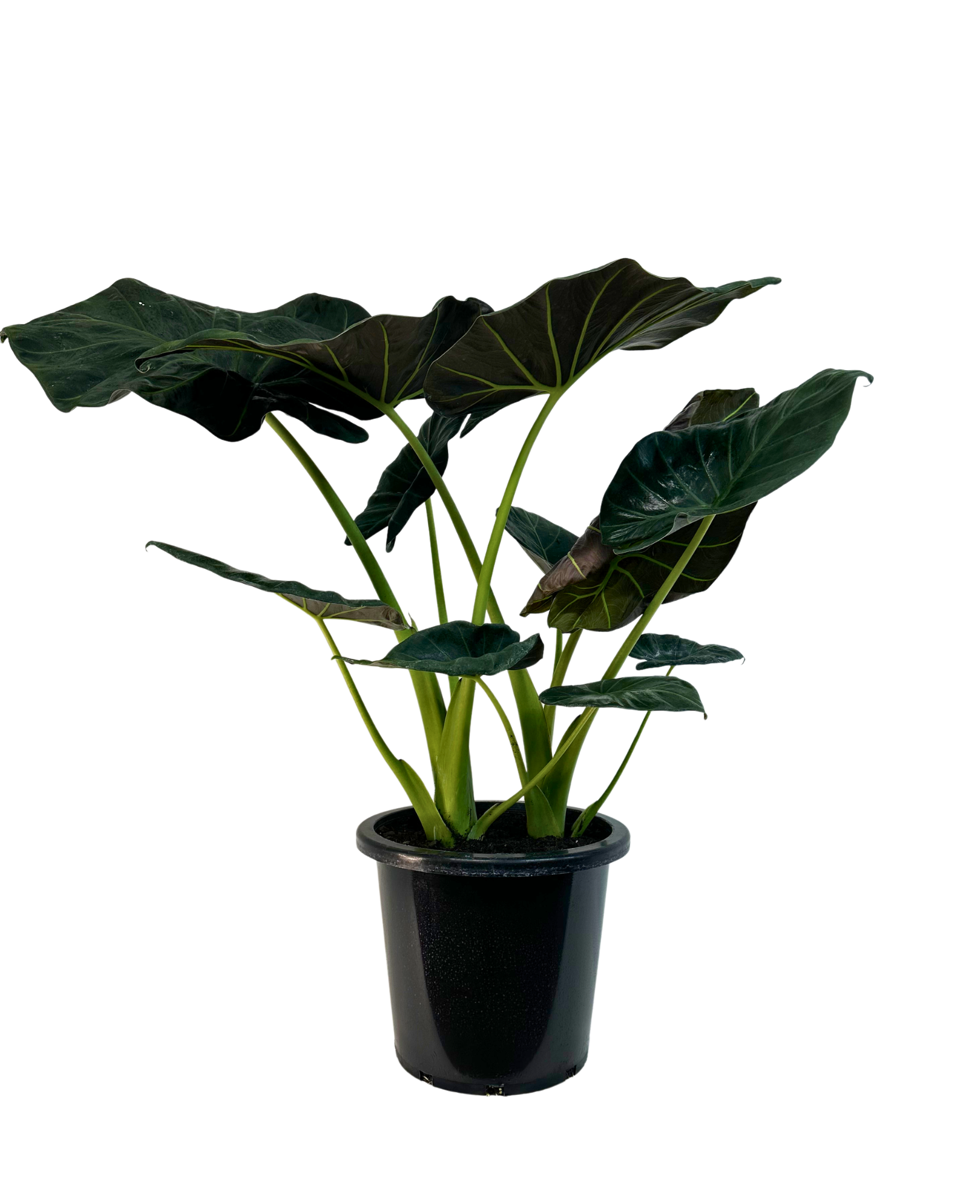
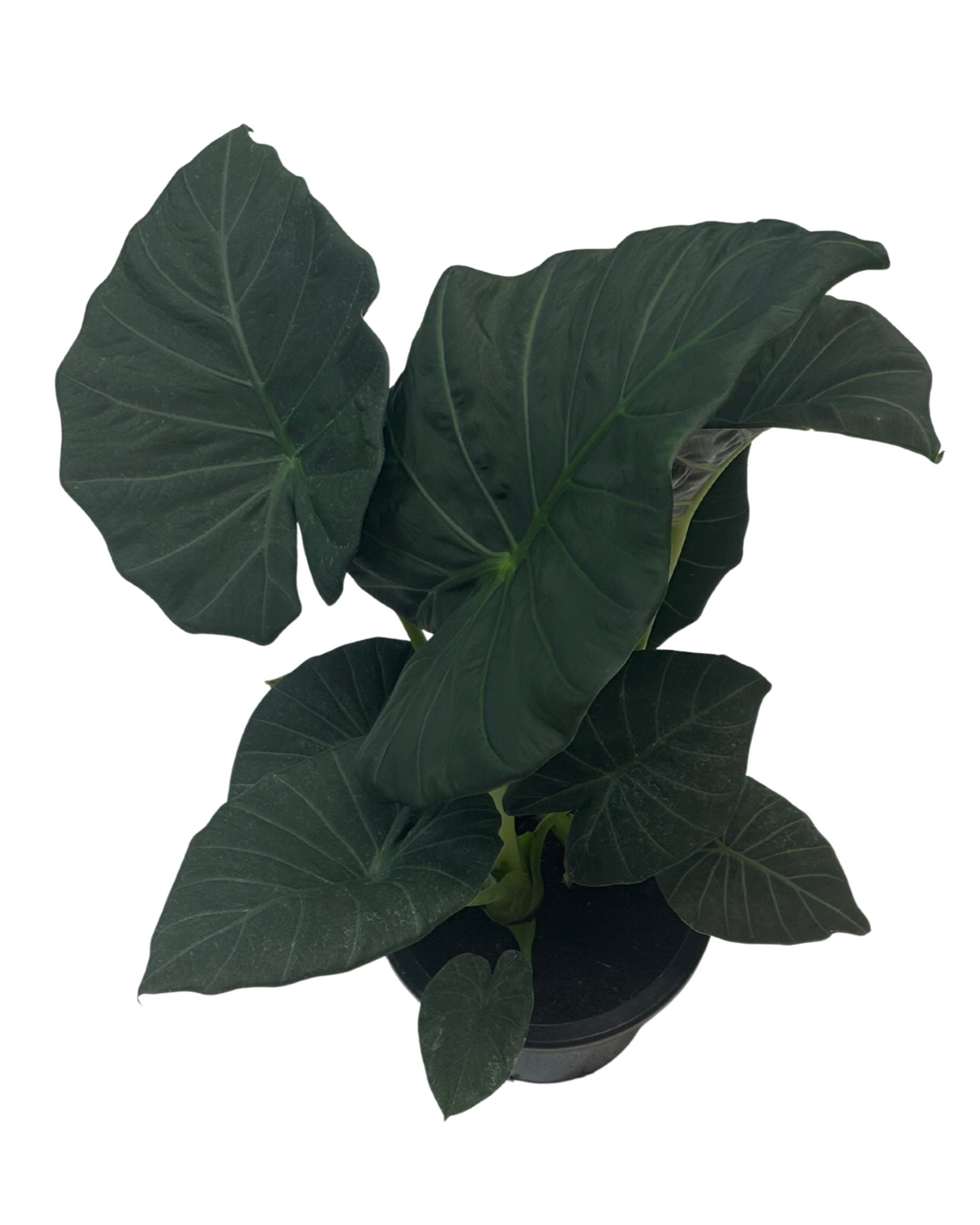
- Alocasia Regal Shield has large, heart-shaped leaves with a velvet surface, pale veins and reddish-bronze undersides.
- Alocasia Wentii has glossy green leaves with purple-bronze undersides, and is one of the easiest alocasias to grow indoors. It grows to about 1.5 m.
Garden alocasias are the large elephant ears, for a shaded spot outdoors.
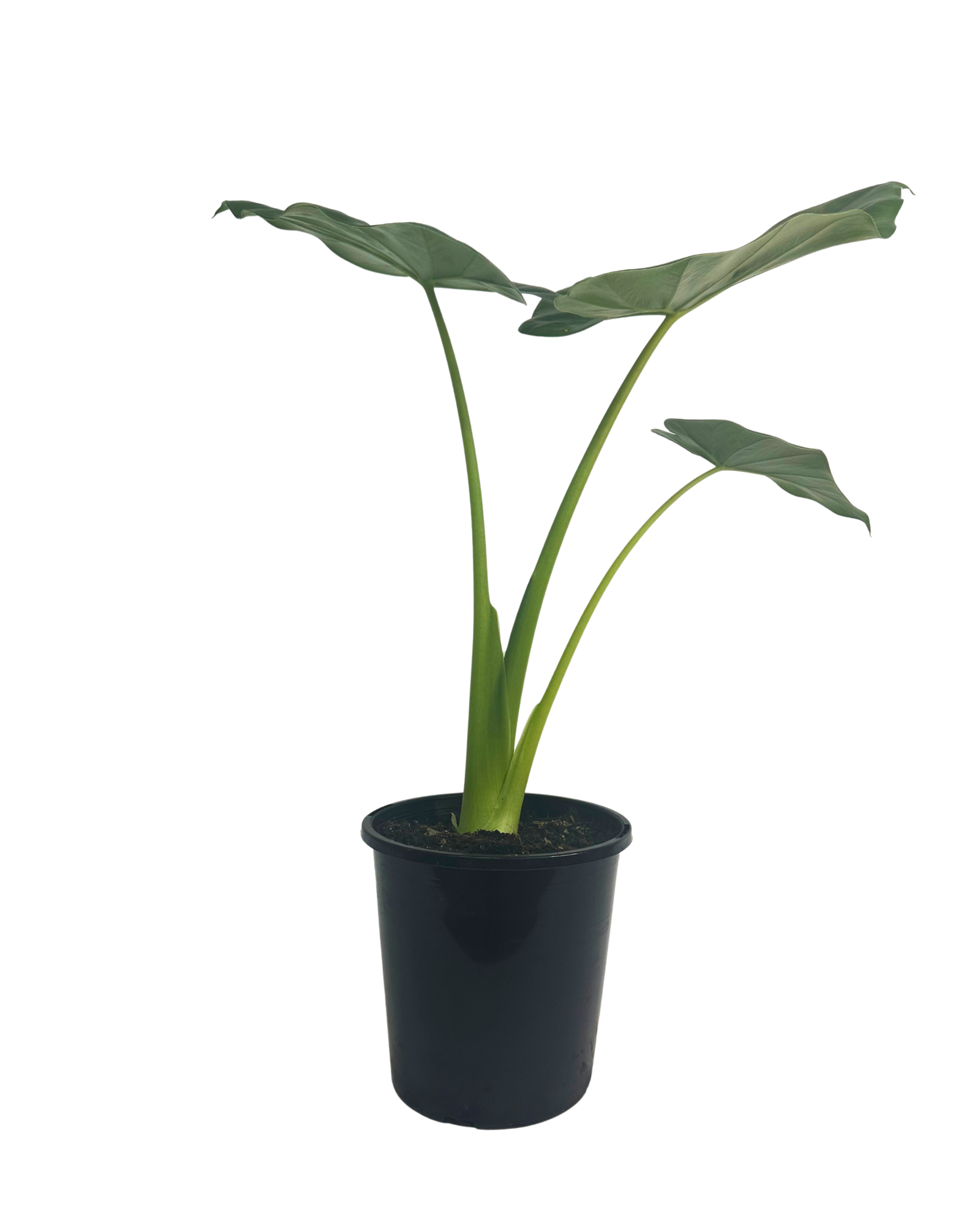
- Alocasia Macrorrhiza is the plant the name elephant ear fits, with huge, glossy upright leaves on thick stems. It grows to 1.5 to 2 m high and wide.
- Alocasia Brisbanensis, known as cunjevoi, is an Australian native from the rainforest margins and creek lines of Queensland and northern New South Wales. It handles deeper shade than most large-leaved plants.
Browse the full range in our Alocasia collection.
Light
Indoors, give an alocasia bright indirect light: near a window, with the sun kept off the leaves. In Perth, afternoon sun through glass will burn the leaves, so keep alocasias out of it. A bathroom or kitchen with good light suits them, since the air there is more humid.
Watering
Keep the potting mix moist through the warmer months, but never waterlogged. Water when the surface starts to dry, water until it runs from the drainage holes, and let it drain. Never leave the pot standing in water in a saucer or a cover pot, since wet roots rot.
Water less in winter, letting the potting mix dry a little between waterings.
Winter dormancy
Alocasias dislike the cold. Through the cooler months many slow down, and some lose most or all of their leaves. The plant has gone dormant and has not died: the bulb-like root below the soil is still alive.
While it is dormant, water only enough to stop the potting mix drying out completely, and stop feeding. Keep the plant indoors in a warm spot, away from cold draughts. New leaves follow in spring, and normal watering and feeding can start again once they appear.
An alocasia will also often drop its oldest leaf as a new one opens. One yellowing leaf at the base of the plant is normal.
Humidity
Alocasias come from the tropics and like warmth and humidity. Grouping them with other indoor plants keeps the air around them more humid, and a light misting helps indoors.
Air conditioning and heaters
Keep an alocasia out of the airflow from air conditioners and heaters, since dry moving air browns the leaf edges. Refrigerated air conditioning also dries the potting mix faster, so a plant in an air-conditioned room needs checking more often through summer.
Outdoors
Alocasia Macrorrhiza and Alocasia Brisbanensis grow in a Perth garden in a shaded, sheltered position, among ferns and other shade-loving plants. Water them well through the warmer months and keep them drier in winter. Shelter them from wind, which tears the leaves.
The indoor alocasias can go outside through the warmer months on a covered patio or in a shade house, out of direct sun. Bring them back inside before the weather cools.
Feeding
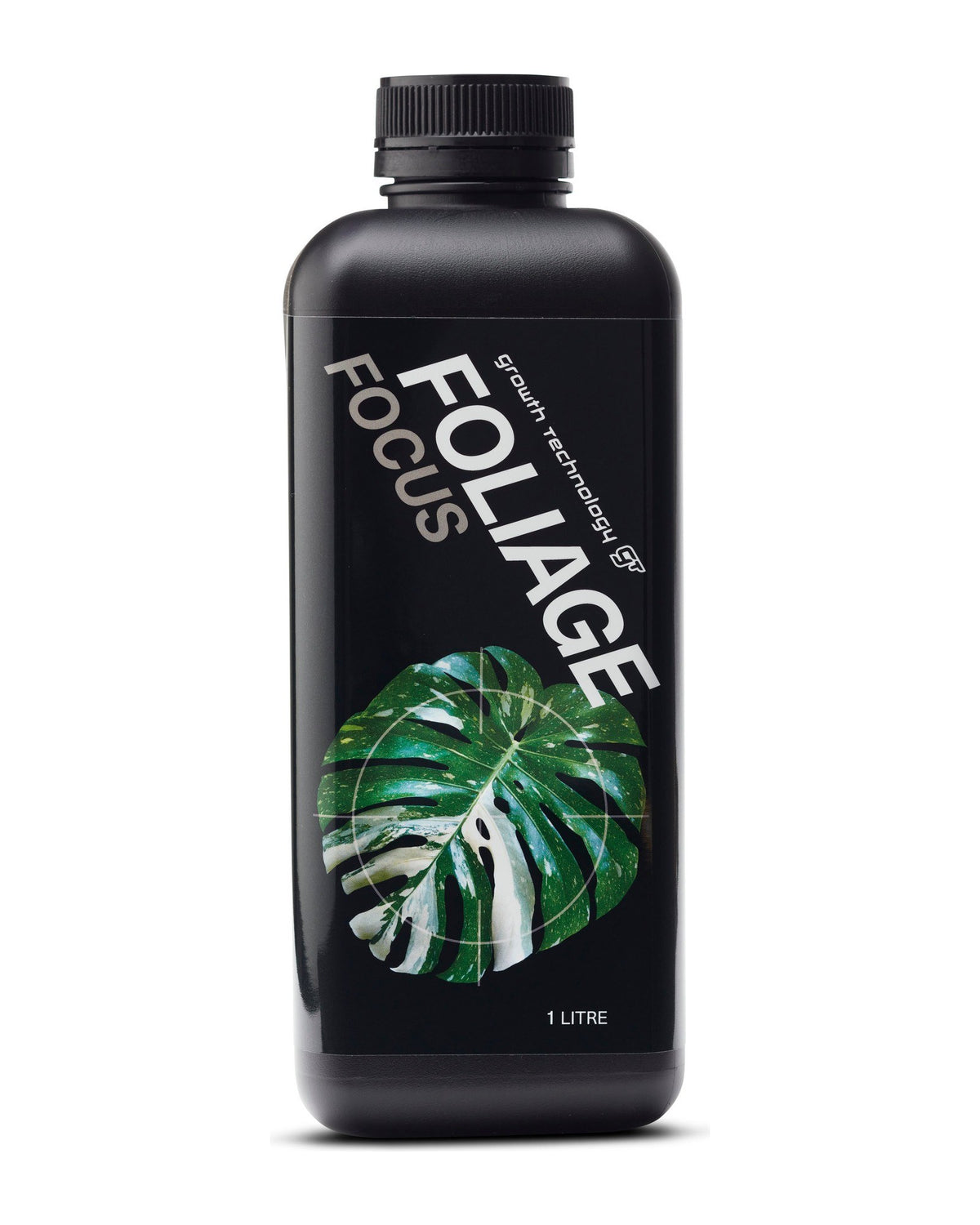
Feed through the growing season, from spring to the end of summer, and stop over winter. A liquid feed at half strength every few weeks suits most alocasias. We recommend Growth Technology Foliage Focus or Plant Runner Indoor Plant Food.
Pots and potting mix
Indoor alocasias need a light, free-draining potting mix that holds some moisture without staying wet. We recommend a specialised indoor potting mix, such as The Home Plant Co Indoor Potting Mix or Searles Indoor Potting Mix. Keep the plant in its nursery pot inside a decorative pot, where water can drain away from the roots, and pot it up only when the roots fill the pot.
For the garden alocasias and the larger Regal Shield, use a well-draining premium potting mix, such as Waldecks Premium Potting Mix.
For an alocasia in a nursery pot of 175mm or smaller, our Trio pots are the range to look at. For a larger plant, look at Terreno, and each Terreno listing gives the nursery pot sizes it fits.
Cleaning the leaves
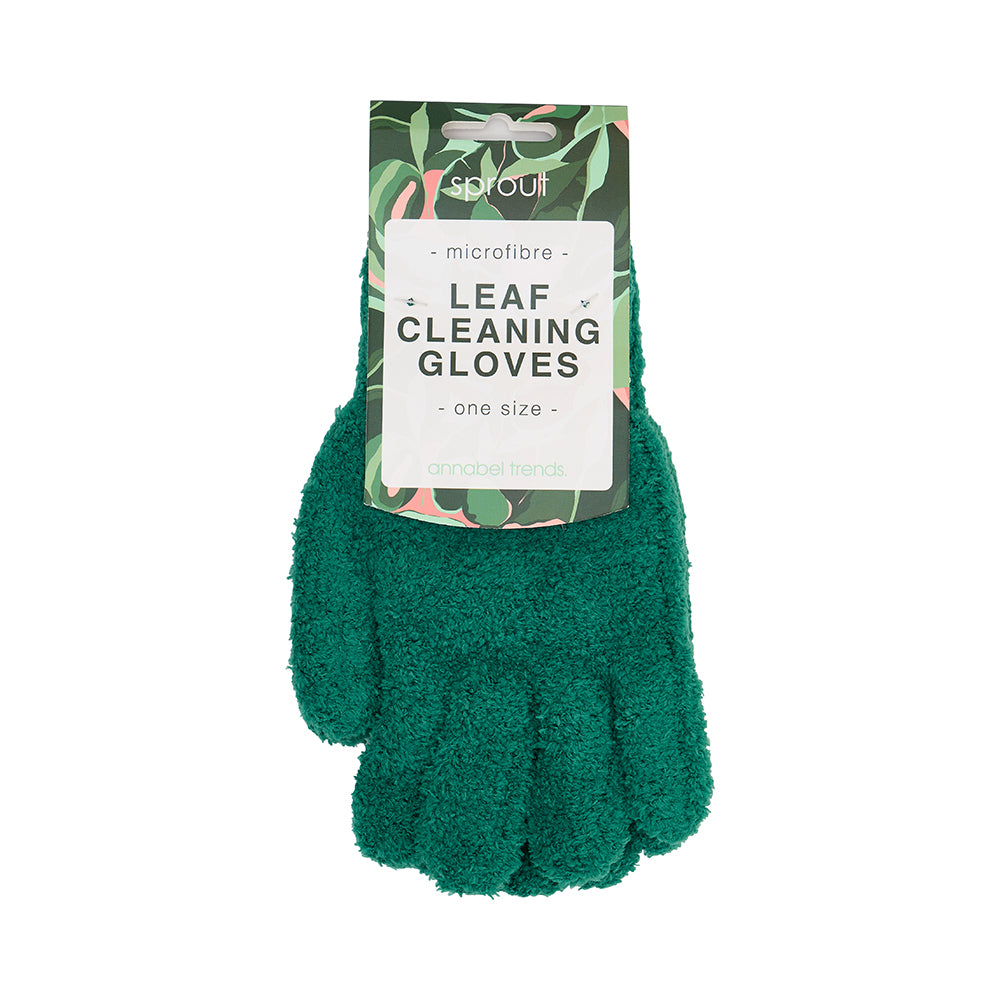
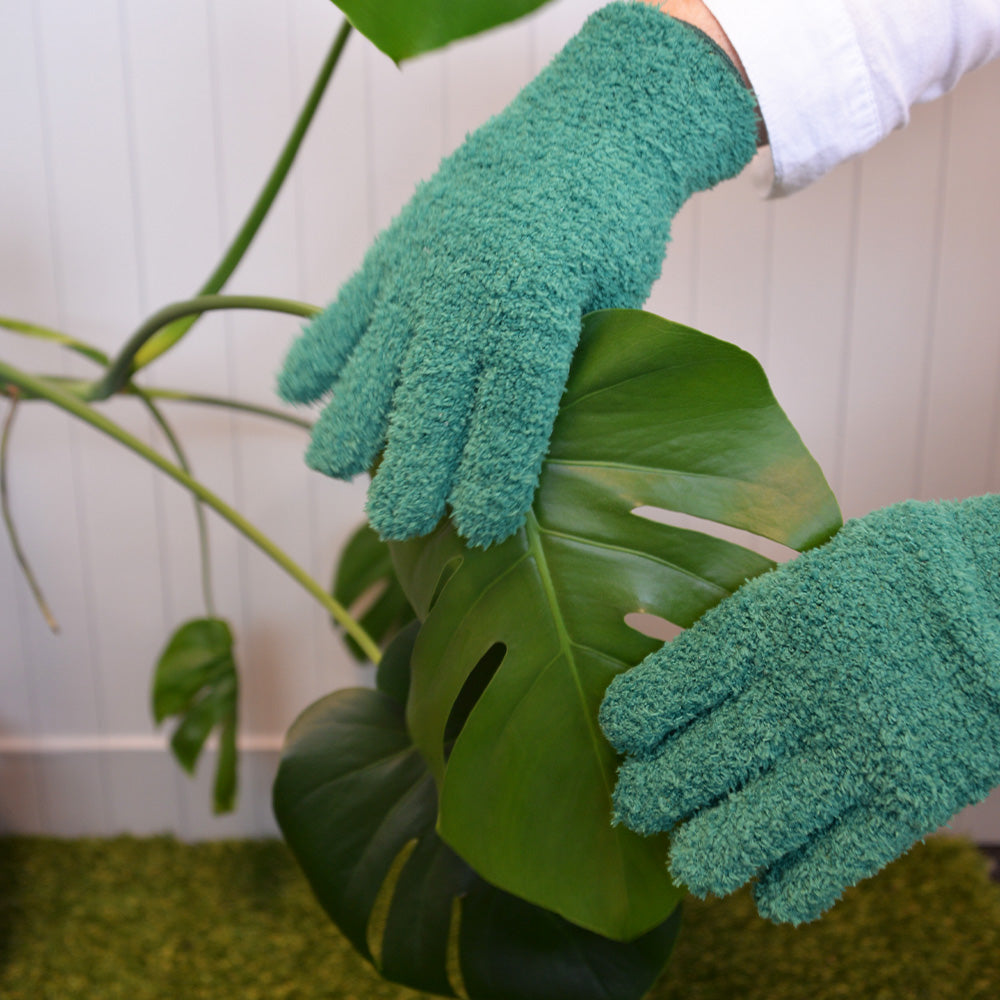
Dust on the leaves cuts the light they take in. Wipe the leaves gently with a soft damp cloth, supporting each leaf from below, since alocasia stems are soft. Leaf Love Gloves and microfibre leaf cleaning gloves make it quicker. While you're wiping, check the undersides of the leaves for pests.
Pests
Spider mite is the pest most often found on alocasias, especially in dry indoor air. It shows as fine speckling on the leaves and, in a bad case, fine webbing on the undersides. If you see it, bring a photo into one of our garden centres, or a leaf sealed in a zip-lock bag or container, and our team will tell you what it is and what to do.
Toxicity
All parts of an alocasia are toxic to pets and people if eaten, and the sap can irritate skin and eyes. Keep plants out of reach of pets and young children, and wear gloves when handling them.